Get Full Government Meeting Transcripts, Videos, & Alerts Forever!
Get email alerts on the Municipal Budget topic
No spam. Unsubscribe anytime.
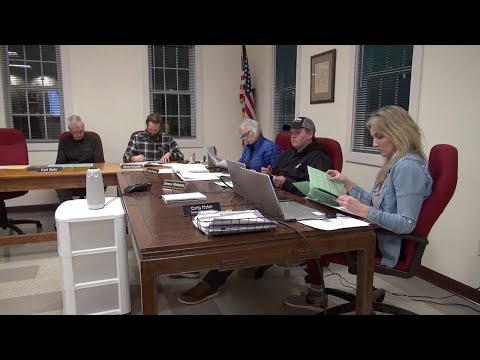
Select Board reviews budget highlights; discusses police chief wage adjustment and accounting of retirement payouts
Summary
Board reviewed multiple budget items including retirement payout accounting, use of unassigned fund balance for appropriations, grants for police equipment and patrols, and a proposed wage adjustment for Police Chief Littlefield; board favored a wage adjustment while leaving overtime-cap changes for later.
Select Board members and staff spent considerable time reviewing departmental budgets, encumbrances and grant revenues at the Feb. 3 meeting, raising questions about accounting practices and staffing costs.
Becky asked for clarification of how retirement payouts had been posted; finance staff explained retirement obligations had been expended from departmental payroll lines and then rebooked from capital-reserve revenues into salary lines by journal entry, which changed how year-end reports appeared. Board members asked staff to work with auditors to develop clearer reporting and a standard protocol for when to replenish fund balances rather than raise new appropriations.
The board discussed using the unassigned fund balance to hold funds for the Cook Memorial Library solar project until the Department of Energy releases reimbursement. Board members suggested establishing an expendable trust or keeping the appropriation in fund balance to avoid spending taxpayer funds before reimbursement arrives.
On police staffing and pay, the board and staff reviewed a proposed wage adjustment for Police Chief Littlefield. Staff described the change as a wage adjustment intended to bring the chief’s compensation closer to comparable towns in the region (presenter cited a local peer-group average near $96,000). The board agreed to present the wage adjustment in the budget but to defer expanding or removing the overtime cap until after additional recruitment efforts and review of staffing needs. The board emphasized recruiting additional certified officers and exploring non-law-enforcement social-service support to reduce calls that currently fall to police.
Staff also identified several grants affecting revenue lines. The police department received a state Office of Highway Safety grant covering equipment and patrols; the speeding-equipment purchase has been completed and a residual patrolling revenue of about $1,015 remains to be used for enforcement through next October, staff said. The board instructed staff to show accepted grants and related reimbursements clearly in the revenue section of budget documents.
Other budget items discussed included encumbered hazardous-mitigation work (a $7,500 grant with $3,500 paid and the remainder encumbered awaiting invoices), fire-training variability and part-time firefighter usage whose actual spending changed year-to-year with fuel, repairs and emergency response demands. Board members asked departments to consolidate variable training and tech lines where feasible to reduce tracking complexity.
No formal appropriations were made at the Feb. 3 meeting; the board directed staff to adjust budget-language clarity and return with revised budget documents for the next hearing.