Get Full Government Meeting Transcripts, Videos, & Alerts Forever!
Get email alerts on the Petition Canvassing topic
No spam. Unsubscribe anytime.
Senate concurs with House amendment to require canvassers to notify signers of criminal-offense risk
Summary
The committee concurred in a House amendment to Senate Bill 207 that requires petition canvassers to inform potential signers that petition-related misconduct is a criminal offense; the change seeks to avoid ambiguity about offense classification and drew one public comment urging caution about volunteer suppression and vagueness.
The Senate State Agencies & Governmental Affairs Committee concurred in a House amendment to Senate Bill 207 that revised language about petition canvasser duties and criminal liability.
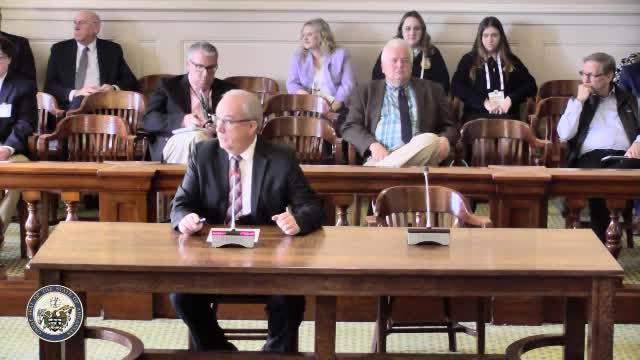
Senator Kim Hammer explained that the House amendment removes explicit class-level language (misdemeanor/felony) and instead requires canvassers to inform potential signatories that certain petition-related misconduct is a criminal offense. “Previously, you may remember, it said it was a felony, detected that there was actually a conflict in the code,” Hammer told the committee. He said the amendment is meant to avoid statutory ambiguity and to put potential signers on notice.
Nathan Lee, chief counsel for the Secretary of State, and Leslie Bellamy, the Secretary of State’s election director, were introduced for the record and were available to answer committee questions.
Carol Egan, a citizen who said she has experience with grassroots canvassers, spoke in opposition. Egan said the required warning could suppress signings and volunteers because ordinary citizens may not understand what “criminal offense” means in this context or may fear liability for minor mistakes such as providing an incorrect address. “If I'm a person in a parking lot, somebody comes up to me and asked me if I would sign a bill... and then they say, well, petition fraud is a criminal offense... I think I'll pass,” Egan said.
Senator Hammer said prosecutors would still determine whether an action merited prosecution and that the amendment aims to increase responsibility among canvassers while leaving charging decisions to prosecuting authorities. He moved to pass the bill as amended; Senator Dodson seconded the motion. The chair announced the motion carried by voice vote.
The committee recorded the concurrence in the House amendment; the transcript shows questions from committee members about whether the code section referenced specifies class-level penalties and includes related discussion about constitutional vagueness and prosecutorial discretion.