Get Full Government Meeting Transcripts, Videos, & Alerts Forever!
Get email alerts on the Transportation Ev topic
No spam. Unsubscribe anytime.
Tamworth moves ahead with plan for four EV chargers despite federal funding uncertainty
Summary
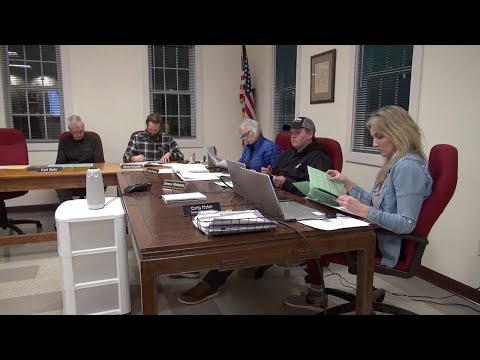
Gabrielle, an Energy Committee member, told the Tamworth Select Board on Feb. 3 that the town has a USDOT grant to install four electric-vehicle charging stations in the village and that the Tamworth Foundation has pledged the remaining 20% of the project cost, contingent on USDOT releasing reimbursement funds.
Gabrielle, an Energy Committee member, told the Tamworth Select Board on Feb. 3 that the town has a USDOT grant to install four electric-vehicle charging stations in the village and that the Tamworth Foundation has pledged the remaining 20% of the project cost, contingent on USDOT releasing reimbursement funds.
The project would add four parking spaces with chargers — including one that must be handicap-accessible — and use conduit already run by the Tamworth Center for the New Arts (TCNA) to lower installation costs, Gabrielle said. She said the USDOT award would cover 80% of the installation costs and the town’s private donor would cover the rest, but a recently announced federal funding freeze has made the timing of reimbursement unclear.
The board discussed how to site the chargers and how to handle enforcement in village parking during busy summer events. Gabrielle proposed placing one charger in a van-sized handicap-accessible space near the TCNA entrance; anyone using that charger would need a handicap decal and an EV. Two other chargers would be at the far end of the TCNA lot. Chief Littlefield said he supported a flexible enforcement approach and recommended adding explicit language to the town’s road regulations (a regulatory authority under RSA) to guide police discretion during peak demand events such as the farmers market and Barnstormers.
Board members asked whether the grant required four spaces; Gabrielle said the grant funding requires four. She also noted that TCNA’s prior conduit work reduced trenching costs and that, if USDOT funds are not released this year, the town may revisit financing at the next town meeting with a warrant article proposing a different configuration.
Gabrielle said the Energy Committee would research how other small towns handle signage, enforcement and ordinance language for EV charging spots, and would bring sample language back to the board. The Select Board did not take a formal vote on the project at the Feb. 3 meeting; Gabrielle said contractors have provided a quote and that the library and town staff will not proceed with physical installation until reimbursement and payment details are clear.
The board and presenters also discussed signing (e.g., “EV charging only” vs. “EV charging”), whether non-EV vehicles could park temporarily when the village is full, and the town’s preference for a written regulation to guide police enforcement rather than ad-hoc decisions.
Gabrielle said the project remains contingent on USDOT releasing funds; if reimbursement is delayed or denied, the town would not proceed without re-evaluating finances.