Get Full Government Meeting Transcripts, Videos, & Alerts Forever!
Get email alerts on the REVENUE & TAX SENATE topic
No spam. Unsubscribe anytime.
Senate revenue committee debates new fiscal‑impact modeling tool and approves committee rules
Summary
The Senate Revenue & Tax Committee discussed how a new fiscal‑impact (dynamic scoring) tool would interact with Department of Finance and Administration analyses and the committee’s workflow, with lawmakers raising concerns about accuracy, assumptions and DFNA workload. The committee also voted to adopt meeting rules.
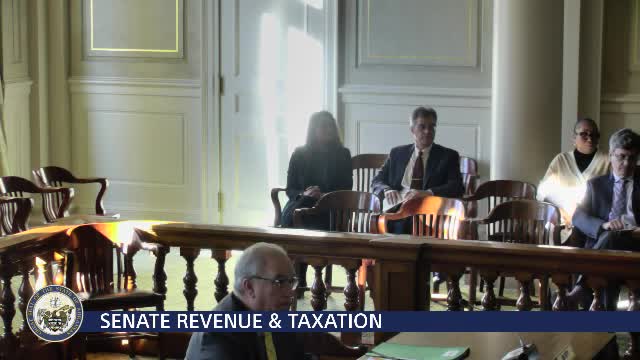
The Senate Revenue & Tax Committee discussed plans to begin using a new fiscal‑impact modeling tool for bill analysis and voted to adopt committee meeting rules during a session where Department of Finance and Administration (DFNA) staff attended.
The discussion focused on how the new “impact studies” or dynamic‑scoring tool would mesh with DFNA work and whether asking DFNA to reconcile its fiscal estimates with outputs from the new tool would be appropriate. Senator Dismayne cautioned that the modeling “is not a science” and “it is not an exact art,” saying committee members should not expect the tool’s outputs to be perfect or to substitute for DFNA’s independent analyses. “At times, we've been able to assist from a taxpayer perspective,” Dismayne said, adding that the committee should avoid asking DFNA to change its policy or assumptions to match the model.
Committee members repeatedly emphasized DFNA’s independence and the practical limits on staff capacity. The chair identified Secretary Jim Hudson of DFNA and agency staff — including Brandon Smith and Teresa Maxwell — and said the committee would coordinate with them. Hudson said it was his understanding the tool could be in place as soon as next week and that the modeling is “supposed to turn around fairly quickly, maybe a day or 2 or 3,” though he and other members noted that DFNA’s traditional fiscal impact statements can take time and may not always capture dynamic economic changes.
Senator Hammer asked specifically about turnaround times and how the tool would be scheduled so that analyses were ready when bills are examined. The committee discussed whether to require the tool for every bill; members expressed concern about over‑reliance on computer‑generated estimates and about the extra workload for DFNA if the committee requested modeling on every measure that could affect general revenue.
The committee agreed to continue refining the process for when and how the tool would be used. The chair said the committee would “figure out that process together” and noted the tool had been advanced out of the executive committee for further consideration.
On a procedural motion, the committee adopted its meeting rules. The chair called for a motion to adopt; after a second, members voiced approval. “All in favor, say aye,” the chair said. When no opposition was voiced, the chair concluded, “we're gonna consider that those rules will be in place.”
The committee then completed housekeeping items, reaffirmed that meetings are normally held in the same room, and adjourned.
Votes at a glance • Motion to adopt committee meeting rules — outcome: approved (unanimous as recorded).