Get Full Government Meeting Transcripts, Videos, & Alerts Forever!
Get email alerts on the Criminal Law Funerals topic
No spam. Unsubscribe anytime.
Senate committee advances 'Luxe’s Law' making sale of cremated remains a felony
Summary
Lawmakers advanced an amended bill, called ‘Luxe’s Law,’ to make the sale of human remains or parts after authorized final disposition a Class C felony, following testimony from a grandmother whose grandson’s cremated remains were trafficked and later recovered.
The Senate Public Health, Welfare and Labor Committee voted to advance an amended bill that would criminalize the sale of a corpse or parts of a corpse after the family has authorized final disposition, making the act a Class C felony with a prison term of three to 10 years and a maximum fine of $10,000.
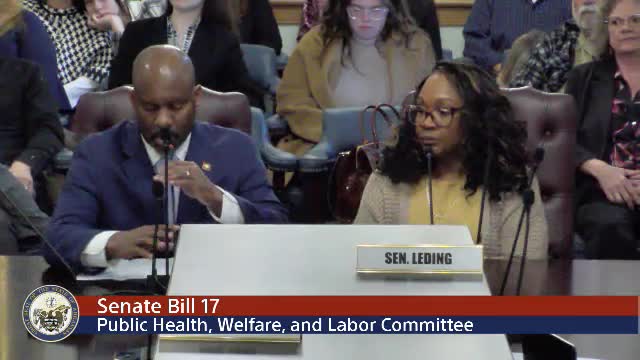
Senator Love presented Senate Bill 17 as amended and said the bill was prompted by a constituent’s account. Lanell Logan and Danisha Smith told the committee that their grandson, Lux, who was stillborn, was supposed to have been cremated but later was found to have been trafficked, sold multiple times and ultimately recovered by law‑enforcement. "He was sold twice," Danisha Smith told the committee, describing the family’s interaction with federal investigators.
Love said he consulted with the State Prosecutors Association and the State Prosecutor Coordinator’s office to draft the amendment and suggested placing the new conduct in the existing abuse‑of‑a‑corpse statute. Laurie Campuras, deputy prosecutor coordinator, told the committee that the change would be placed within the current abuse‑of‑a‑corpse law to cover the situation described by the family and to make clear that "authorized final disposition" means the family's instructions to the funeral director or person handling the remains.
Senator Love described the proposed statutory penalty: a Class C felony punishable by a minimum of three and up to 10 years in prison and a fine up to $10,000. After questions and public testimony, a motion to pass the bill was seconded and the chair announced approval by voice vote.
Why it matters: The amendment aims to create specific criminal penalties to deter the sale and trafficking of human remains after a family has authorized burial or cremation. Supporters said the bill fills a gap in Arkansas law uncovered by the family's case, where prosecutors said there was no clear statute that addressed the sale of remains as described.
Next steps: The sponsor said the amended bill will move forward according to Senate procedures. Committee testimony included victims’ relatives, state prosecutors’ office staff and lawmakers; no formal roll‑call vote was recorded in the committee transcript.