Get Full Government Meeting Transcripts, Videos, & Alerts Forever!
Get email alerts on the Workforce Development Study topic
No spam. Unsubscribe anytime.
Senate panel approves study to analyze $200 million in workforce‑development funding
Summary
SB50 directs the hospital, Medicaid and developmental disabilities subcommittee to study state and federal workforce‑development funds and report to the next General Assembly; sponsors and multiple nonprofits urged broad stakeholder participation and cautioned against hiring outside consultants.
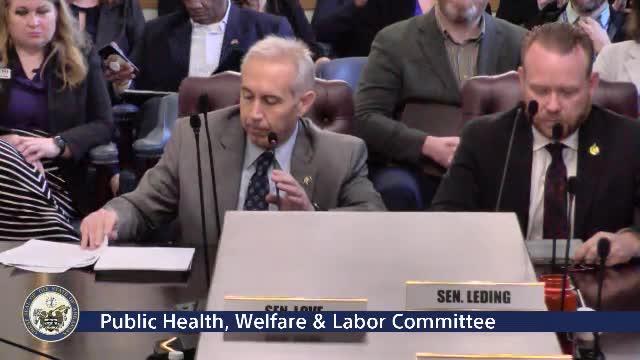
The Senate Public Health, Welfare and Labor Committee approved Senate Bill 50 after testimony from advocacy groups, a nonprofit director and a small‑town mayor urging broad local participation.
Sponsor Justin Boyd told the committee the bill would create a study structure to examine how more than $200 million in state, federal and other workforce development funding (fiscal 2022) is used and to identify gaps and overlaps that affect Arkansans seeking economic mobility.
“This bill seeks to study the successes and potential failures of how these funds are helping Arkansans navigate the government maze of programs and provide a clear hand up rather than just simply being a handout,” Boyd said in presenting the measure.
Witnesses who testified in support included Paul Chapman of Restore Hope, Pete Gess of Arkansas Advocates for Children and Families, and Ethan Dunbar, mayor of Lewisville.
Paul Chapman described Restore Hope’s community alliances and said, “all the different help, whether it be public or private that exist in our communities, is, is not connected together,” and cited outcomes from their model: 3,314 families served in 19 counties in 2024 and 670 who completed the pathway into full‑time employment.
Pete Gess urged focus on “benefit cliffs” and described modeling that shows a Pulaski County family of three could face four major cliffs and losses that “can amount to as much as $7,000 in 1 fell swoop,” which can discourage accepting higher pay.
Mayor Dunbar said rural participation matters, noting his town’s 27 percent poverty rate and urging the inclusion of rural families and local community groups in the study.
Committee members pressed whether the study would hire outside consultants. Sponsor Boyd and backers repeatedly said there were no current plans to contract out the work and that the legislative council and executive‑branch staff (Medicaid, workforce development) would be leaned on to keep costs low.
Senator Love asked that the bill explicitly identify groups to be invited into the study; sponsors said they were open to suggestions and intended the hospital, Medicaid and developmental disabilities subcommittee cochairs to shape the final participant list.
Senator Boyd closed and the committee passed SB50 by voice vote.