Get Full Government Meeting Transcripts, Videos, & Alerts Forever!
Minnesota DHS outlines $1.57 billion in proposed cuts and reforms; senators raise concerns about county cost shifts and care impacts
Summary
Department of Human Services leaders presented the governor's 2025 budget proposal to the Minnesota Senate Human Services Committee on Feb. 17, outlining program-integrity changes, targeted savings and rate reforms that DHS said would reduce projected growth while directing new investments to some direct-care workers.
Department of Human Services leaders presented the governor's 2025 budget proposal to the Minnesota Senate Human Services Committee on Feb. 17, outlining program-integrity changes, targeted savings and rate reforms that Department staff said would reduce projected growth while directing new investments to some direct-care workers.
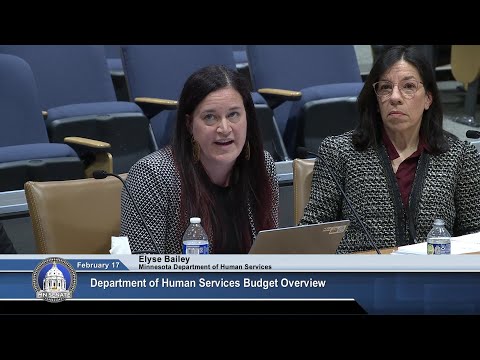
The committee heard the presentation from Shereen Gandhi, who is serving as temporary commissioner for the Department of Human Services, Elise Bailey, the department's budget director, and Natasha Mers, assistant commissioner for aging and disability services. Bailey summarized topline figures for the package: "the totals are about 372.4, million in savings in the first biennium, and 1,200,000,000.0 in the second, for a total of 1,570,000,000.00," and then described a long list of programmatic changes and cost-control proposals.
Why it matters: The package seeks to slow Medicaid and waiver spending growth while adding targeted supports for some direct-care workers. Committee members pressed DHS officials about the projected savings, the potential effects on nursing homes and small group-living providers, and a principal concern that much of the proposed reduction would be shifted to counties rather than federal or general-fund savings.
Key proposals presented
- Program integrity and early intensive behavioral interventions (EIDBI): Bailey said DHS would create provisional licensure for EIDBI providers, shorten provider revalidation cycles from five to three years, require background checks before provider enrollment, add maltreatment investigatory authority and clarify employer-employee definitions for EIDBI work. DHS said the change aims to protect people receiving services and improve oversight.
- Substance use disorder (SUD) billing and recovery residences: DHS proposed disaggregating current one-hour SUD billing codes into 15-minute unit codes to align with ASAM (American Society of…
Already have an account? Log in
Subscribe to keep reading
Unlock the rest of this article — and every article on Citizen Portal.
- Unlimited articles
- AI-powered breakdowns of topics, speakers, decisions, and budgets
- Instant alerts when your location has a new meeting
- Follow topics and more locations
- 1,000 AI Insights / month, plus AI Chat