Get Full Government Meeting Transcripts, Videos, & Alerts Forever!
Get email alerts on the Active Transportation Bikelanes topic
No spam. Unsubscribe anytime.
Residents urge San Mateo officials to keep Humboldt Street bike lanes, say removal will reduce safety
Summary
At the Feb. 12 Sustainability and Infrastructure Commission meeting, callers and residents criticized a recent City Council decision to remove bike lanes on Humboldt Street in North Central, citing safety for students, recent traffic fatalities, and potential loss of grant funding. Speakers said they represent PTAs, school district trustees and a
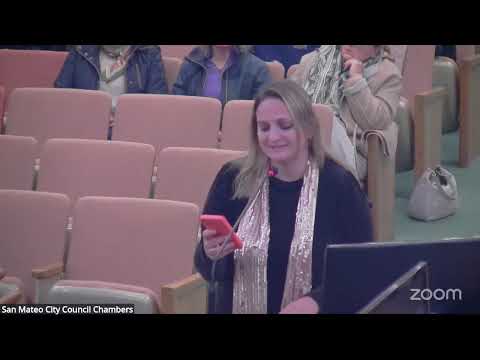
Residents and advocates used the public‑comment period at the Sustainability and Infrastructure Commission meeting on Feb. 12 to ask city leaders to preserve Humboldt Street’s bike lanes and to reconsider a recent City Council decision to remove sections of those lanes.
“North Central is an equity priority area. It has the highest crash rate in the city of San Mateo on local roads,” caller Mike Squire said, adding that about 6,000 students attend schools in nearby neighborhoods. Squire said the Sustainability and Infrastructure Commission previously approved the Humboldt lanes 5‑0 and criticized what he described as a lack of process and outreach before the City Council’s decision to remove lanes.
Allison McQueen, a San Mateo resident and safe‑streets advocate, told the commission that her group’s petition has 562 signatures and that a coalition of San Mateo school PTAs and the San Mateo Foster City School District Board of Trustees has publicly supported keeping the lanes. McQueen repeated concerns about safety, saying the Humboldt lane removal would reduce the city’s longest continuous bike lane and could jeopardize future state or federal grant funding for bicycle infrastructure. “With San Mateo’s requirement to densify housing, we will not be able to guarantee everyone a parking spot in front of their house,” she said, arguing that city streets are a shared public resource.
Speakers cited numbers and studies during comment. One caller said city surveys estimated about 10,000 rides per month on the Humboldt lanes and that the city spent about $10,000 on survey work; another caller repeated an estimate that converting parking to additional spaces would cost roughly $2 million to add 100 spots (described in testimony as approximately $20,000 per spot). Those claims were put forward as arguments that the lanes have meaningful use and that removing them risks forfeiting future grant dollars and increasing traffic danger near schools.
Commissioners acknowledged the comments but noted that the Sustainability and Infrastructure Commission could not reverse recent City Council actions. The chair encouraged residents to raise concerns with staff for follow‑up and noted the commission’s role primarily involves review and recommendation on transportation and sustainability projects rather than reversing council votes.
Ending: Several speakers urged the commission and staff to preserve the Humboldt lanes and to ensure outreach to families and cyclists in North Central. Commissioners and staff said they would relay community concerns to the relevant city bodies and that the issue had generated significant community interest.