Get Full Government Meeting Transcripts, Videos, & Alerts Forever!
Get email alerts on the Alcoholic Beverage Regulation topic
No spam. Unsubscribe anytime.
Harford County delegation advances two alcohol licensing changes, defers performing-arts license vote
Summary
The Harford County delegation approved two technical amendments to local alcoholic beverage rules—clarifying golf-simulator license limits and allowing online public hearing notices—and postponed action on a performing-arts nonprofit record‑keeping bill until the formal LR is filed.
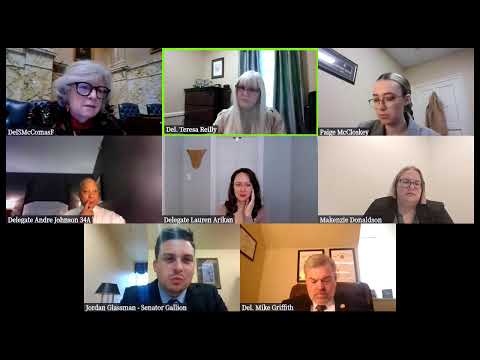
The Harford County delegation on Zoom advanced two local alcohol beverage measures and postponed a third after state and county regulators requested a final technical check.
The measures affect how certain retail and special‑event alcohol licenses are counted and how local liquor boards can notify the public of hearings. Delegation Chair Delegate Teresa Riley led the discussion and said the delegation will take a final vote on the performing‑arts nonprofit license once the official LR number and final bill text are available.
Why it matters: the changes clarify how a new golf‑simulator license counts against an existing limit on Class B licenses and modernize notice rules so local liquor boards may post public hearing notices online in lieu of a county newspaper. Local boards and the state alcohol regulator told the delegation the language needs to be precise to avoid unintended consequences if similar local bills are replicated elsewhere.
Jeff Kelly, identified in the meeting as the executive director of the state alcohol regulator (referred to in the hearing as ATC/ATCC), told the delegation the performing‑arts bill requires technical corrections to remove references to the Comptroller and to preserve local boards’ authority over enforcement. "This bill does a nice job of identifying requirements like record keeping, very, very important, the ability to inspect," Kelly said, adding that the department supports removing the Comptroller where the authority no longer exists.
Kelly explained that Maryland operates under a three‑tier distribution system, and the performing‑arts nonprofit license created an exception that required close drafting. He and presenter Tom Akris (introduced by the chair) recommended striking language that would require state‑level immediate suspension authority and instead funnel complaints to the local liquor boards to handle enforcement and any suspension or revocation.
Mackenzie Donaldson, the delegation analyst from the Department of Legislative Services, advised waiting for the formal, LR‑numbered bill packet before taking the delegation’s official vote on the performing‑arts language: "So this should be the same language. However, I would probably recommend just waiting until you do have the physical backing just to make sure."
Votes at a glance: - LR 13‑11 (definition and counting of a Class GSF, golf‑simulator facility): Motion recorded as "move favorable" and seconded. Voice vote recorded Aye from multiple delegates; one delegate (Steve Johnson) was absent at the roll call. The delegation chair announced the motion passed by majority. - LR 14‑64 (allow local liquor boards to post public hearing notices online in lieu of publishing in a county newspaper): Motion recorded as "move favorable," seconded; voice vote recorded unanimous aye among voting members present, with one member (Steve Johnson) absent. Chair announced the motion passed. - Harford County performing‑arts nonprofit license (alcohol record‑keeping and inspection provisions): Discussion held; the delegation deferred a formal vote until the official LR is available and confirmed by DLS. The ATC/ATCC and Harford County Liquor Control Board both supported the corrective language but asked that references to the Comptroller be removed and that enforcement remain a local board matter.
Details and context: - The performing‑arts measure was framed as a corrective/technical bill intended to align local language with the state regulator (ATC/ATCC). Kelly noted prior statutory changes moved enforcement responsibility out of the Comptroller’s office and into the state alcohol commission; the bill needs to stop assigning duties to an office that no longer carries them. - LR 13‑11 clarifies that an individual holding a Class B license may receive one Class GSF (golf‑simulator facility) license and that the GSF counts toward that licensee’s maximum number of Class B licenses (the local cap cited in discussion was nine). The delegation discussed concerns about concentration of licenses and the liquor board emphasized the GSF must count within the existing Class B limit so it does not create an additional slot. - LR 14‑64 would allow a local board to "publish notice" in a county newspaper or post the notice online at least 14 days before a hearing. Delegation members noted county newspapers have reduced print capacity; the liquor board pays for advertising and members said online notice could save local costs.
Next steps: Delegation Chair Riley said the delegation will reconvene in person next Thursday (Room 302, House Building) and expects the LR for the performing‑arts bill to be available; the delegation intends to finalize its vote then.