Get Full Government Meeting Transcripts, Videos, & Alerts Forever!
Get email alerts on the Outdoor Dining topic
No spam. Unsubscribe anytime.
Community board raises enforcement concerns after outdoor dining rollout
Summary
Manhattan City Community Board 2 members reported widespread confusion and uneven compliance after the city's outdoor dining program began, urging clearer enforcement channels and proposing local mediation and targeted enforcement of egregious violations.
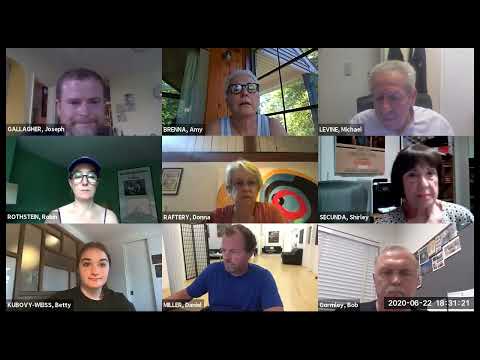
Manhattan City Community Board 2 members told a board meeting that the city's outdoor dining program began with widespread variation in compliance and uncertain enforcement.
Board member Bob said, "Secondly, as everyone knows, the, the outdoor dining started today," and described walking an area near the community board where "about 8 or 10 places" had set out tables and "at least 3 of them were doing it improperly." Carter, speaking later in the meeting, said the Department of Transportation (DOT) had not explained how complaints would be handled: "the DOT has not has not addressed how complaints will be managed or handled." Chanel (board member) said DOT had advised people to file 311 complaints so they could be routed to the appropriate agencies: "people should file 3 0 1 complaints, and... those complaints would be routed to the appropriate agencies." The transcript also recorded a DOT figure shared in the meeting chat that 3,192 restaurants had applied and certified for the program.
Board members and committee chairs described a mix of problems they expect to see in the coming days: tables placed in front of adjacent storefronts, restaurant seating spilling into parks, amplified music affecting residents and customers, and unsafe conditions for pedestrians and cyclists on narrow sidewalks. Several members said a small number of operators are acting beyond the program's limits and that those operators create disproportionate neighborhood impacts and unfair competition for businesses that comply.
Members discussed enforcement channels and next steps. Participants noted that different complaints map to different agencies: DOT complaints and general quality-of-life complaints via 311, noise or amplified-music complaints via 311 (or the precinct, depending on the nature of the event), and liquor-license issues to the State Liquor Authority (SLA). The board discussed practical steps including:
- A potential targeted campaign to press precincts and the Parks Department to take action in a few clearly egregious cases so that enforcement examples set a community-wide standard. - Creating a local mediation or liaison group to work with individual businesses and neighbors to resolve disputes and encourage voluntary compliance. - Developing a simple "how to complain" guidance for residents including the specific data agencies need (address, license number where appropriate, and a clear description of the violation) so 311 and SLA complaints are actionable.
Board members emphasized limits to local authority. One member noted that many enforcement powers reside with city agencies and the SLA and that the board's practical option in many cases will be persuasion and local mediation rather than direct enforcement.
The board asked staff to: (1) collect specific examples of egregious operators and share them with precincts and relevant agencies, (2) draft guidance for residents on how to file effective complaints (including which agency to contact for which problem), and (3) consider a short-term committee or liaison team to mediate disputes and coordinate with elected officials.
The discussion spanned multiple agenda items and public-safety, parks, and commercial committees; board members said they expect the next few weekends to make clear which enforcement gaps the city must address.
Ending
Board leaders called for rapid follow-up with DOT, NYPD precincts, Parks Department and the State Liquor Authority and for drafting simple guidance residents can use to file actionable complaints. Several members said they would pursue targeted enforcement examples and a mediation approach to resolve neighborhood-business conflicts without waiting for new citywide rules.