Get Full Government Meeting Transcripts, Videos, & Alerts Forever!
Get email alerts on the Police Reform topic
No spam. Unsubscribe anytime.
Manhattan Community Board 2 to draft statement on policing, form working group after protests; members cite local looting and systemic racism
Summary
Members of Manhattan Community Board 2 agreed to draft a statement condemning police brutality, solicit board input and form a working group to develop short-, medium- and long-term recommendations after an extended discussion of protests, policing and local property damage.
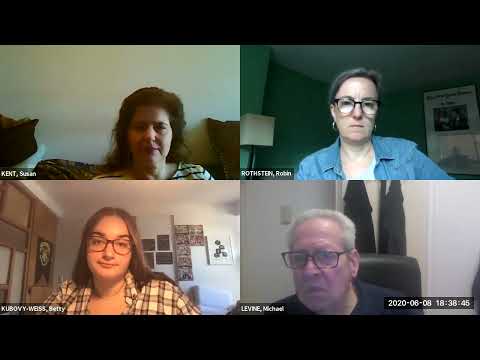
Manhattan Community Board 2 members spent the bulk of a virtual meeting discussing the recent protests over the death of George Floyd, local law enforcement response and how the board should respond publicly and in policy work. The board agreed to draft a statement or resolution condemning police brutality and to form a working group to develop short-, medium- and long-term recommendations; the chair said the draft will be discussed by the executive committee next week and then brought to the full board for consideration.
The issue drew repeated, often emotional remarks from board members on differing points: support for peaceful protest, concerns about public safety and looting, and calls for deeper, structural change to how city services are funded and delivered. "We're outraged at the death of George Floyd, the systemic racism enshrined in our laws and policies," Chair Carter said, adding that the board supports "the peaceful message of all protesters" while also reporting concern for neighbors and calling for order to be restored.
Why it matters: board members said the board needs a visible position both to acknowledge community outrage and to propose practical measures the board can influence locally — such as policing in schools, community outreach with precincts and support for affected residents and small businesses. Several members urged the board to move beyond a single letter and establish a sustained process for follow-up.
What the board agreed to do
- Draft a statement or resolution that acknowledges systemic racism, supports peaceful protest and outlines local priorities for reform; the chair said the draft will be reviewed by the executive committee next week and returned to the full board for a vote. - Form a working group or task force to develop short-, medium- and long-term recommendations; members proposed that the working group include representatives from multiple standing committees so recommendations would integrate across the board's work. - Ask every board member to submit a small set of priorities (the chair suggested three bullet points) before the executive committee meets, to help identify areas of consensus.
What board members said
Speakers framed the discussion in several recurring ways: some emphasized immediate public safety and property damage in the neighborhood, others emphasized structural racism and budget reallocations away from policing. "I have spent the past 10, 12, 14 days so angry I could cry," board member Matt said. Amy said plainly that "there's institutionalized racism" and urged strong words and strong action to dismantle it. Others, including board member David, said they oppose defunding the police but support retraining and reallocation of some functions to social services.
Several members urged sustained community engagement with precincts. Coral said the neighborhood coordination officers had become more responsive in the nights after the worst incidents and proposed improving ongoing lines of communication between precincts and the board. Chenault and other members emphasized the board's role in representing residents who live above and next to storefronts that were damaged.
Local effects raised during the meeting
District manager Bob reported aggregated damage counts collected from business improvement districts (BIDs) covering parts of the board area. His summary, compiled June 3 and noted as not fully up to date, included the following: the Village Alliance (Eighth Street corridor and nearby) reported 46 damaged storefronts (not counting graffiti); the NoHo BID reported 52 damaged storefronts including 21 looted; the SoHo/Broadway area reported damage to 37 retail locations with 19 looted and about 80% of storefronts boarded as of last week; the Union Square Partnership reported roughly two dozen damaged properties and damage to city property including signs and kiosks; the Meatpacking BID reported damage to 15–20 storefronts; and the Hudson Square BID reported damage to four storefronts with one looted. Board members emphasized that many residents live above those storefronts and felt directly affected by the unrest.
Next steps and limits of board authority
Board members repeatedly emphasized that the community board does not control City Hall's budget or NYPD policy, but that it can make recommendations and press elected officials. Members suggested multiple possible products: a short public statement, a formal resolution for board vote, and the working group to develop concrete proposals that would be forwarded to the mayor's office, the comptroller and local elected officials. Chair Carter said the board will try to build consensus by circulating draft language and collecting members' priorities before the executive committee meets.
Where the discussion touched budgets and policy
Participants cited recent proposals and numbers in the broader city debate: speakers referenced the NYPD's roughly $6 billion budget and outside proposals to reallocate a portion of police funding to social services; Coral pointed to the city comptroller's published recommendations (about $1.1 billion in potential reallocations was cited) as an example of an already-developed plan the board could study. Several members recommended looking at allocations to school-based policing, school counselors and community-based social services as local avenues for change.
Community context and outreach
Members suggested the board should combine acknowledgment of residents' safety concerns with concrete outreach plans: improved communications with precinct neighborhood officers, support for small businesses and tenants harmed by looting, and attention to education issues raised in adjacent committee work (including a Schools & Education meeting planned to address how to talk to children about racism and a planned appearance by the Manhattan schools superintendent). The board discussed whether the board should form a standing committee, a time-limited working group, or embed anti-racism work across existing committees; several members urged that any working group be designed to influence all committees rather than remain siloed.
Ending note
Board members said they wanted rapid initial action and a longer-term implementation plan. "The first step is not being silent," said one member; others agreed that a single letter should be the beginning of a sustained effort combining community outreach, concrete policy recommendations and cross-committee work. The chair asked members to send priorities before the executive committee meeting, and said the group would return with draft language and a clearer proposal for the working group's membership and charge.