Get Full Government Meeting Transcripts, Videos, & Alerts Forever!
Get email alerts on the Emergency Preparedness Food Storage topic
No spam. Unsubscribe anytime.
Shawnee County employee demonstrates dry-pack food storage, offers tips for household emergency supplies
Summary
Renee Aldridge, a Shawnee County Human Resources employee and on-call Kansas Division of Emergency Management response and recovery specialist, led a public demonstration on dry-pack food storage, explaining containers, oxygen absorbers, recommended inventories and common pitfalls.
Renee Aldridge, a Shawnee County Human Resources employee and a retired — but on-call — response and recovery specialist with the Kansas Division of Emergency Management, led a public demonstration on dry-pack food storage and emergency food inventories at a county preparedness event.
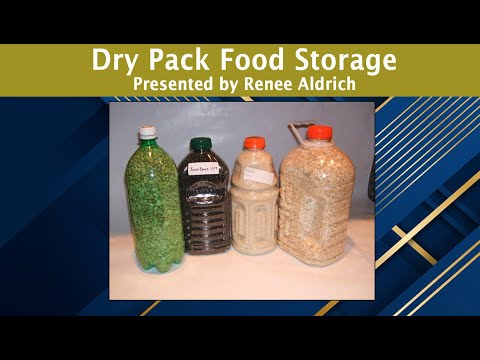
Aldridge described dry-pack canning methods, recommended containers and labeling practices, and demonstrated use of oxygen absorbers and FoodSaver bags to extend shelf life. "Cool, dark, and dry," Aldridge said, summarizing storage conditions she recommended for long-term food supplies.
The demonstration included examples of containers and preserved foods — including freeze-dried peaches, powdered butter and mashed-potato boxes — and practical tips for households. Aldridge advised using polyethylene (PETE) containers for long-term dry storage where marked with the recycling triangle and keeping vacuum-sealed items in a secondary rigid tote to protect them from damage.
She cautioned against using oxygen absorbers with certain items. "Don't put an oxygen bag in it. It will make it turn into a big brick," Aldridge said, referring specifically to sugar and salt and noting brown sugar should be treated the same way. Aldridge recommended breaking large bulk purchases into smaller, household-sized portions to avoid waste.
Aldridge cited quantities from a standard food-inventory sheet she shared with attendees. The sheet lists per-person annual grain use at about 400 pounds and provides a minimum water guideline she described as "4 14 gallons minimum, for water per person for only 2 weeks." She also demonstrated that a single 300 cc oxygen absorber is sufficient for a gallon-size container, and noted larger containers can be managed with multiple absorbers and bucket-based instructions included in her materials.
Attendees asked questions throughout a hands-on portion of the session; Aldridge also handed out sealed seed packets and encouraged participants to take them home. She referenced a BYU study on container reuse discussed in her church's canning program and recommended dehumidifiers in Midwest basements to protect dry-packed goods.
The session was instructional and did not include formal county action or votes. Organizers said printed materials and a website link with supplier information were available for attendees who wanted to replicate the methods at home.
Less critical details from the presentation included personal background Aldridge offered: she said she has taught emergency preparedness to church groups, has gardened and canned since childhood, and noted family details while introducing examples. A spouse identified as Jay attended the session and assisted with materials on the table.