Bend offers $3-per-square-foot turf‑replacement rebate; applications open April 1
Loading...
Summary
City of Bend staff detailed eligibility, irrigation and planting requirements for the 2025 turf‑replacement rebate at a community workshop, noting lessons from 2024 and emphasizing pre‑consult approvals and five‑year maintenance.
At a City of Bend workshop, city utilities staff outlined the 2025 turf‑replacement rebate program, telling homeowners the rebate will pay $3 per square foot for up to 1,000 square feet (maximum $3,000). Caitlin, a utility compliance technician for the City of Bend, said applications open April 1, projects must be completed by Oct. 31 and that applicants must wait for a pre‑consultation approval before beginning turf removal: “please do not start the turf removal process until we get that first pre evaluation,” she said.
The rebate is part of Bend’s broader water‑conservation strategy. Staff emphasized outdoor irrigation drives peak summer demand — the city estimates about 60% of annual water production is used outdoors — and that reducing turf is a major opportunity to cut use. “We like to see conservation as a third source of water,” Caitlin told attendees, describing conservation alongside the city’s surface‑ and groundwater supplies.
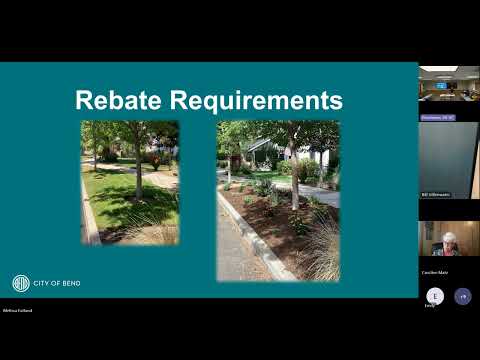
The workshop summarized three required elements for a qualifying conversion: switch the existing irrigation in the rebate area to a high‑efficiency system (eligible options include inline drip, point‑source drip, or specified high‑efficiency spray nozzles on areas wider than 8 feet); replace turf with low‑water‑use plantings that will achieve roughly 50% mature canopy coverage; and cover the finished area with at least 3 inches of mulch (organic or rock). Staff said seedings are not eligible; plant starts (plugs, gallon or smaller pots with above‑ground growth) are required.
Eligibility and process
City of Bend water customers only are eligible; an estimated 20,000 people in the broader urban area receive water from other providers and do not qualify. Projects must be on irrigated turf (the program excludes turf that was removed previously). The city will accept applications beginning April 1. After the application and a project plan are submitted, staff will schedule a free pre‑consultation to measure the proposed area, review irrigation and plant plans and confirm the rebate amount. Once the pre‑consultation approval is issued, applicants have 90 days to complete the work, and all projects must be finished by Oct. 31. A post‑project inspection verifies compliance; the city mails rebate checks within about 60 days of final approval. The converted area must be maintained for five years.
Program results from 2024
Staff reviewed the 2024 pilot: the program removed 42,165 square feet of turf (just shy of a football field). The city offered funding to 85 projects and 58 were completed. Reported costs (before rebate) averaged $8.44 per square foot overall; DIY projects averaged $3.39 per square foot while contractor projects averaged $13.21 per square foot. Staff said projects with very high per‑square‑foot costs often included unqualified work outside the rebated area.
Irrigation, trees and turf removal methods
The workshop covered irrigation options and long‑term maintenance. For the converted zone the city requires a single irrigation equipment type (no mixing of drip and overhead spray within the rebated hydrozone). Eligible methods include inline drip tubing (emitters every 12–18 inches), point‑source drip with multiple emitters per plant, and high‑efficiency nozzles where the conversion area is wider than 8 feet. Each converted line should include a flush valve for winterization and maintenance; staff said there should be one flush valve per converted line.
Staff warned that trees in the conversion area must be protected and continue to receive irrigation. If trees share the same zone as the converted turf, applicants should plan irrigation rings or bubblers sized to tree canopy (the presentation included guidance and sample calculations for tree water needs). The city will not require a separate valve for trees in all cases but said separate zoning is possible and sometimes preferable.
For turf removal, the city promotes two main methods: mechanical sod cutting (sod removal) or sheet‑mulch (cardboard/compost/mulch lasagna). Sheet‑mulch is not eligible in narrow street strips (right‑of‑way) because it builds material on top of the soil and raises erosion concerns. All methods require hand work along hardscape edges and special care around tree roots. Staff advised calling 811 (Oregon Digs) before any digging to have utilities located.
Planting and post‑installation requirements
Plants must be low or very‑low water‑use species (the OSU plant guide and the city’s streetscape guide were recommended). The program measures plant coverage by mature canopy; applicants should plan for roughly 50% coverage at maturity. Existing trees within the proposed conversion area generally must be retained; the city said exceptions for hazardous or diseased trees can be discussed during site review. Artificial turf and impervious surfaces (for example expanding a driveway with new asphalt) are not eligible.
Maintenance includes seasonal controller adjustments and regular checks of valves, tubing and emitters; staff recommended WaterSense‑labeled controllers for automated seasonal adjustments. Staff said plant mortality of transplants is expected (roughly a typical 20–25% mortality rate), and minor replacements are not in themselves disqualifying; final approval focuses on irrigation performance and mature coverage targets.
Program coordination and other rebates
Staff noted the city offers device rebates (smart controllers, conversion kits, high‑efficiency nozzles) that can complement turf conversions but cautioned applicants they cannot claim multiple rebates for the same equipment in the same rebated zone. If equipment or technology serves other, separate zones on the property, those separate rebates may be possible.
Code change affecting new development
A staff member noted Bend’s updated development code, effective Nov. 1, 2024, restricts grass in the street strip for new developments and requires efficient irrigation for new projects that enter planning after that date. The change does not retroactively remove existing turf but will limit new grass plantings on future development street strips, staff said.
Where to get details
City staff directed homeowners to the City of Bend utilities web page for the application and to sample project‑plan templates distributed at the workshop. They also recommended the OSU plant guide, local native plant nurseries and WaterSense resources for controllers. Attendees were repeatedly urged to keep the turf watered until after the city’s pre‑consultation inspection so staff can confirm eligibility.
The workshop was an informational session; no council action or vote took place at the meeting.