Get Full Government Meeting Transcripts, Videos, & Alerts Forever!
Get email alerts on the Ethics And Transparency topic
No spam. Unsubscribe anytime.
Yamhill County commissioners debate formal policy, agree to greater transparency for expense reports
Summary
At a Feb. 6 work session, commissioners discussed formalizing rules for expense reimbursements after past abuses were cited, agreed to increase transparency by sharing expense reports with the board and to revisit caps during budget deliberations.
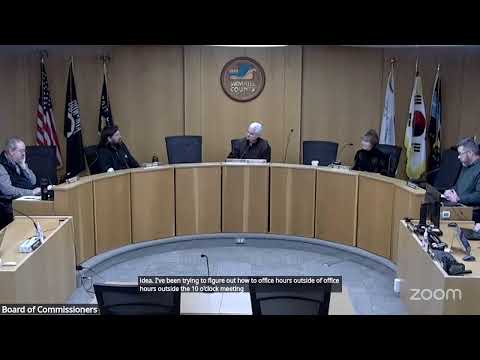
On Feb. 6, the Yamhill County Board of Commissioners discussed whether to formalize rules for commissioners' expense reimbursements, with a consensus reached to increase transparency and staff directed to share expense reports with the board when they are submitted.
Commissioner Starett opened the work-session item by recounting past instances in which some commissioners had submitted expense claims the board now views as excessive. “I just want to make sure we all were up to speed on what the expectations, limitations, some of the guidelines, and then perhaps we might want to put something formalize it, memorialize it into a policy,” Commissioner Starett said, describing how previous boards had largely paid expenses out of pocket and saying the current discussion should determine whether to codify limits and review steps.
County Counsel Christian explained the current administrative practice. “Under the existing policy … I'm the initial point of review and really, you know, as the policy says, determine that the expenses were previously budgeted and that they were made in connection with official county business,” Christian said, adding that denials can be appealed to a panel consisting of the district attorney, county treasurer and county administrator.
Discussion among commissioners focused on two principal options: (1) keep the current oversight but post expense reports or otherwise provide the board/public earlier access, or (2) impose a specific annual cap on commissioner discretionary spending (the longstanding discretionary allocation discussed during the meeting is $1,500 per commissioner). Advocates for a cap argued it prevents open-ended use of public funds; opponents said a hard cap could limit an elected official’s ability to do the job and that commissioners are accountable through public records and electoral processes.
Several commissioners described informal personal practices: one said they routinely do not submit expenses and had accumulated their discretionary allocation and donated it to the Yamhill County Sheriff’s Foundation. Others said mileage and conference travel are legitimate county expenses and should remain allowable within guidelines.
In the end the board agreed on a near-term, non-substantive step: County Counsel Christian will notify the board when commissioners’ expense reports are submitted, and staff will work to make expense reports more readily available to the public (for example placing them on the consent agenda or posting them online). Commissioners asked staff to return with options for formal policy changes, including examples from other counties, and to bring budgetary implications to the Budget Committee meeting in late April so any cap or other changes can be reflected in FY26 appropriations.
The discussion also noted existing constraints in county policy, including that county funds cannot be used for alcohol and that an appeal process exists for denied reimbursements. Commissioners asked staff for clearer categorical guidance (prohibited uses, per-diem limits, mileage rules) to reduce future disputes and asked that any substantive policy change be revisited in future work sessions and budget discussions.
The board did not adopt a new ordinance or formally change the county policy at the Feb. 6 session; the outcome was a direction to increase transparency and to have staff return with concrete policy options and budget implications for board consideration.
For follow-up, county staff indicated they will: (1) notify the board when expense reports arrive, (2) work on options to post reports or include them on a consent agenda for public view, and (3) prepare historical spending information and examples of other counties’ policies for a future work session and for the FY26 budget process.