Get Full Government Meeting Transcripts, Videos, & Alerts Forever!
Get email alerts on the Land Use topic
No spam. Unsubscribe anytime.
Albemarle County BZA denies Clark’s Tract lot-size variance request
Summary
The Board of Zoning Appeals denied a request to reduce a rural-area lot from 7.01 acres to 1.3867 acres (case VA202403654). Staff recommended denial, and the board voted 5-0 to deny after finding the application failed to meet the variance standards in Albemarle County Code.
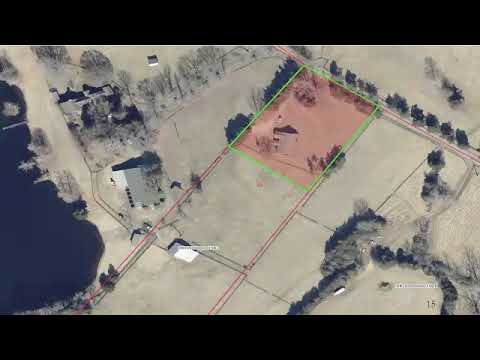
The Albemarle County Board of Zoning Appeals voted 5-0 on Feb. 4 to deny a variance request that would have reduced an existing lot in the rural area from 7.01 acres to about 1.3867 acres.
The application, filed as VA202403654 for a property on Clark’s Tract, was presented by applicant Andrew Lin, who said the change would “adhere to the rural character by adding 5 acres of pasture from 654 to an existing horse farm and leaves a balance of 1.3 with a house in conformance with the neighboring 1 acre plus or minus size residences.” Lin told the board he sought the change to protect his viewshed and keep pastureland attached to his horse farm.
County staff, represented by Deputy Zoning Administrator Francis McCall, recommended denial. McCall told the board the application “does not meet all of those particular criteria” for a variance and therefore staff recommended denial. County Attorney Andy Herrick framed the board’s legal question succinctly: “The question for the board is, does this 2 acre minimum unreasonably restrict the utilization of the applicant’s 7 plus acre parcel?”
Nut graf: The board rejected the variance after deliberations that stressed the long-standing two-acre minimum for rural-area lots in Albemarle County’s zoning code and the narrow legal standard for approving variances. Members said the applicant had reasonable options short of reducing the required minimum, including deed restrictions or pursuing a rezoning.
Board discussion and reasoning Board members asked staff and the county attorney about the origin and practical application of the two-acre minimum for the rural area. Staff and counsel said the two-acre minimum has existed since the county’s 1980 zoning ordinance; McCall and others said historical practice has largely carried that requirement forward. Herrick and other speakers noted many smaller lots in the area predate the 1980 ordinance.
Several board members said denial was appropriate under the variance criteria. One board member said the county’s rural lot minimum does not “unreasonably restrict the use of this property,” and that the request did not show the hardship standard required for a variance. Another board member noted the county’s comprehensive-plan focus on concentrating growth in designated growth areas rather than allowing increased density in the rural area.
Applicant response and alternatives Lin described the parcel layout and his concern for the view from his barn and driveway. He pointed to on-site septic reserve areas and told the board that adjacent small lots lack suitable space for drain fields. During questioning, board members and counsel suggested alternatives the applicant could pursue, including scenic easements, deed restrictions, or a rezoning application to change the property’s zoning if the applicant sought smaller lot sizes through legislative processes.
Vote and outcome Board member John Shepherd moved to deny the variance application; the motion was seconded. The roll-call vote was Joseph — Aye; Rosenberg — Aye; Burkhart — Aye; Shepherd — Aye; Carrington — Aye. The motion carried 5-0, and the board formally denied VA202403654.
Ending: procedural notes The board heard the variance as the meeting’s first public hearing item after a short agenda amendment. The applicant’s appeal options were not altered by the board’s vote; counsel noted the applicant could pursue alternatives such as rezoning or private deed restrictions. The denial was recorded in the meeting minutes and will be reflected in the official decision notice.