Get Full Government Meeting Transcripts, Videos, & Alerts Forever!
Get email alerts on the Public Safety And Health topic
No spam. Unsubscribe anytime.
Pico Rivera and sheriff's station introduce autism decal program for first responders
Summary
City staff and the Pico Rivera Sheriff's Station presented an autism decal program for residents with autistic family members; deputies will receive refresher training and decals will be distributed free on request.
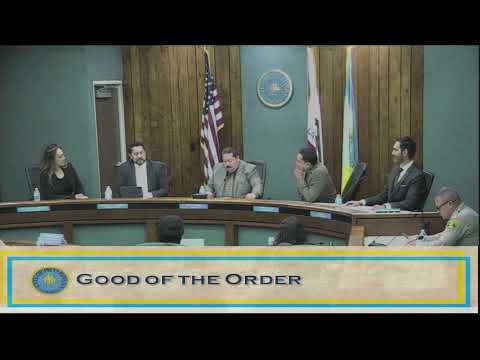
The City of Pico Rivera and the Los Angeles County Sheriff's Department Pico Rivera Station introduced an autism decal program at the Feb. 11 council meeting aimed at helping first responders identify residences or vehicles where an individual with autism may need special care.
Gabriel Castarena, supervisor of media for the city, said the sheriff's station supports the program and that deputies will receive a refresher course on recognizing and interacting with individuals on the autism spectrum. "The main purpose of the autism decal is to provide emergency personnel with visual notice that there is an individual with autism either at the scene of a traffic incident, or an emergency at their place of residence," Castarena said.
Castarena described two decal sizes: a 4-by-4 inch die-cut sticker intended for vehicles and a 5-by-5 inch die-cut sticker intended for homes. Decals will be available free of charge at the sheriff's station upon request, the presentation said. Castarena noted the program was developed in cooperation with acting Captain Jose Hernandez and Deputy Sepulveda and said he proposed countywide expansion.
Council members praised the proposal and asked staff to bring a full report back to the council with implementation details. The meeting record shows the council agreed to the introduction and asked staff to return with a full report; no formal vote was required to introduce the program.
The city said the program is intended to improve communication and safety during emergency responses involving nonverbal or vulnerable individuals. Council members and staff emphasized that the decal is voluntary and distributed to caregivers upon request.