Get Full Government Meeting Transcripts, Videos, & Alerts Forever!
Get email alerts on the Public Forum topic
No spam. Unsubscribe anytime.
Residents raise concerns about downtown event access, immigrant protections, hospital DOA reports and neighborhood road issues
Summary
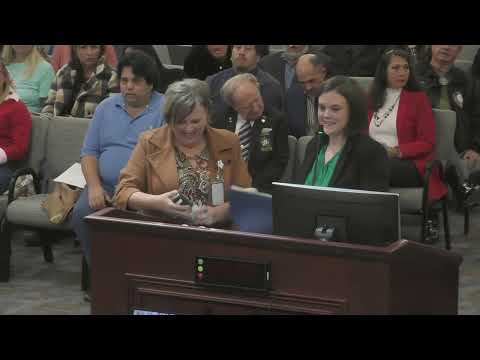
Several residents used the City Council public forum on Feb. 10 to urge the council to review a downtown events policy, revisit immigrant-related resolutions and ordinances, investigate ambulance/ER access concerns and repair a washed-out subdivision road.
Several residents used the City Council public forum on Feb. 10 to urge action on distinct local concerns: a downtown events policy that a resident says blocks certain civic groups from participating; requests for renewed council action on immigrant protections and to repeal the city’s no-camping ordinance; reports of emergency response delays and “dead on arrival” incidents at a local hospital; and requests to repair a washed-out road in Raycon Subdivision.
Kalista Cuevas told the council she believes Cool Springs, the organization that manages downtown Fayetteville events under a city-funded contract, is refusing applications from some civic groups and is thereby restricting free-speech access at taxpayer-funded events. Cuevas said Cool Springs “refuse[d] to even accept an application from Sandhills Republican Women in Action” and urged the council to “review the terms of the downtown management contract” so city-funded events permit participation by organizations that promote civic engagement. She characterized Cool Springs’ role as funded and authorized by the city and therefore subject to constitutional constraints; the council did not make an immediate policy change on Feb. 10 but later scheduled related items for a work session (see actions).
Sean McMillan, speaking as a resident and organizer, asked the council to bring back a previously split 4–4 resolution supporting immigrant communities for another vote and to consider repealing what he described as an inhumane no-camping ordinance. He framed those requests in the context of broader civil-rights and racial-justice priorities and urged the council to “do everything in its power to uphold and promote policies that value humanity.”
Jose I. Cardona described recurring “dead on arrival” (DOA) incidents at a hospital near Owen Drive and Village Drive and urged the council to explore traffic and emergency-access solutions, including dedicated lanes or other measures to improve ambulance response times. Cardona said he was unable to find clear public data on the number of DOA cases and asked the council to investigate and improve local emergency access.
Resident Eric Nelson asked the council to repair a washed-out access road in Raycon Subdivision that was previously patched after Hurricane Matthew and that the speaker said failed again during a recent storm. Nelson said the remaining damage creates a 15-foot-deep by roughly 20-foot-wide chasm that limits access and emergency response and requested that the city repair the road regardless of litigation or other disputes over a dam in the area.
Council later moved to place the Cool Springs downtown district item on a work session agenda for March to allow more detailed examination. Other requests from speakers—such as review of the no-camping ordinance or investigation of hospital DOA counts—were recorded as public comments; the council did not enact immediate policy changes during the Feb. 10 business meeting.
The public forum rules were read at the start of the session: each speaker is limited to three minutes, with procedures for sign-up and timekeeping enforced by the city clerk.