Get Full Government Meeting Transcripts, Videos, & Alerts Forever!
Get email alerts on the Retirement Savings topic
No spam. Unsubscribe anytime.
Treasurer asks Appropriations Committee to back automatic enrollment for new state employees in supplemental 457(b) plan
Summary
State Treasurer Derek Davis told the House Appropriations Committee he is sponsoring House Bill 605 to automatically enroll state workers hired on or after Jan. 1, 2026, in the state's 457(b) supplemental retirement plan with a 90‑day IRS‑allowed opt‑out; supporters including AARP Maryland and TIAA testified in favor while AFSCME objected.
State Treasurer Derek Davis told the House Appropriations Committee he is sponsoring House Bill 605 to automatically enroll new state employees hired on or after Jan. 1, 2026, into the state's 457(b) supplemental retirement plan and place them in a target fund tied to their anticipated retirement year. “Employees who do not want to participate will have 90 days, the maximum allowed per IRS rules, from the date of the first payroll deduction to elect to opt out,” Davis said at the committee hearing.
The bill’s sponsor and staff said the measure is intended to raise retirement savings among state employees by removing administrative barriers to enrollment. Davis noted that as of the third quarter of 2024, “only 40.5% of all eligible state employees were actively participating in their supplemental retirement savings by deferring contributions to the MRSP plan accounts,” and cited research showing most working adults prefer automatic enrollment.
Laura Addis, deputy treasurer for public policy, told the committee the treasurer’s office is offering three amendments. The first restores flexibility for higher education institutions that participate in the optional retirement plan to select which supplemental plan they use. The second sets a ceiling on the minimum default deduction so the board cannot select an automatic default deduction above $25; Addis said the $25 figure is a ceiling, “not meant to signal that that has to be the right number.” The third amendment would require that employees be offered virtual or in‑person counseling from the plan administrator so they understand the opt‑out window and their choices.
Witnesses from advocacy and retirement‑service organizations urged the committee to support the bill. Tammy Bresnahan, senior director of advocacy for AARP Maryland, said automatic contributions can provide immediate tax benefits and make long‑term saving easier. “Contributions to a 401(k) plan are made with pretax dollars reducing taxable income and lowering an employee's immediate tax burden,” Bresnahan told the committee, adding that the change could help some workers qualify for income‑based benefits.
Josh Freeley, regional vice president for state government relations at TIAA, also backed HB 605 and pointed to federal momentum behind automatic enrollment. “Automatic enrollment helps people overcome those barriers,” Freeley said, noting Congress had codified automatic‑enrollment features in the SECURE Act 2.0 (2022) for certain workplace plans.
AFSCME Maryland opposed the bill in testimony. Denise Gilmore, AFSCME’s legislative and political director, said many state employees are already stretched financially and that automatic deductions could add to their burden. “When I say that state employees can't afford this, it's true,” Gilmore said, and she asked the committee to give the bill an unfavorable report. AFSCME also urged more one‑on‑one, unbiased counseling rather than an automatic default.
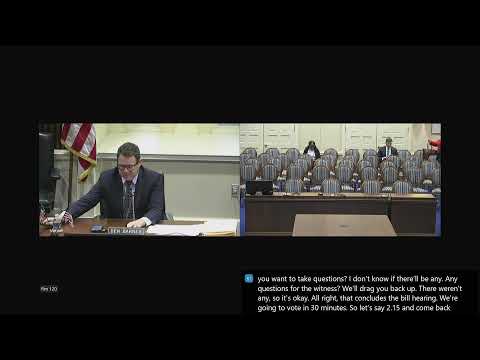
Committee members asked clarifying questions about account access and the opt‑out process. A committee member expressed concern that some workers — particularly those without college degrees or who find account systems complex — might struggle to navigate the process, and Davis and Addis reiterated that the opt‑out process would be a phone or email to the plan administrator with a refund via check or ACH if done within the 90‑day window.
No committee vote on HB 605 was recorded at the hearing; committee staff said the bill hearing ended and the committee would reconvene later to vote. The treasurer and sponsors asked the committee for a favorable report and said the amendments are intended to address concerns raised by opponents.