Get Full Government Meeting Transcripts, Videos, & Alerts Forever!
Get email alerts on the Gaming And Racing topic
No spam. Unsubscribe anytime.
Senate committee approves overhaul creating Racing and Gaming Corporation, protects charitable gaming rules
Summary
The Senate Licensing and Occupations Committee voted to pass House Bill 566, which implements the Racing and Gaming Corporation created last year and preserves tax, license, and technology protections for charitable gaming while setting funding and governance rules for the new agency.
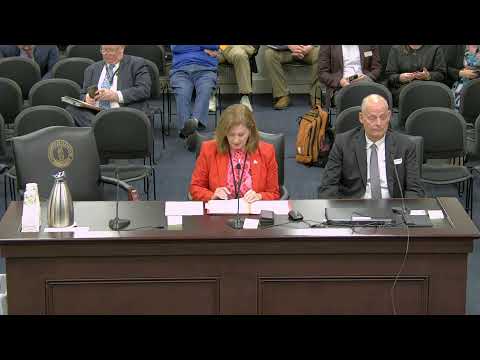
The Senate Standing Committee on Licensing and Occupations voted to give House Bill 566 a favorable report Tuesday, approving a committee substitute that implements the Racing and Gaming Corporation and preserves several protections for charitable gaming organizations.
The measure, sponsored in the House by Rep. Matt Cook, implements the plan enacted last year by Senate Bill 299 to create the Racing and Gaming Corporation. Cook told the committee the bill is organized in three parts covering charitable gaming, the corporation’s funding and governance, and a temporary set of provisions for quarter horse racing.
Cook said the bill locks the charitable gaming tax structure and increases charitable gaming representation on the corporation’s board to three members, effective immediately. He told the committee that charitable gaming venues would retain technology they had in place on July 1, 2025, and that common school districts may obtain an annual charitable-gaming license that allows subordinate organizations — for example boosters — to operate under the district’s license.
On funding, Cook said the corporation is intended to be self-funded, with industry dollars supporting administration. The sub allows up to 10% of each fund for administration; uncashed vouchers are allocated to problem gambling (10%), backside improvements (65%), and administration/regulation of live horse racing (25%), Cook said.
The bill also creates a temporary pathway for quarter horse racing: a three‑year sunset permitting purchase of an out‑of‑state pregnant mare and a method to make its foal Kentucky‑bred, plus a new registrar and a Quarter Horse Racing Fund. Cook said those provisions are meant to increase quarter horse racing participation in Eastern Kentucky.
Senators asked about enforcement staffing and whether the corporation would be able to regulate a possible growth in charitable gaming. Jamie Eads of the Kentucky Horse Racing and Gaming Corporation said the enforcement division currently has a director and four additional enforcement staff. Cook said the corporation’s structure — described to senators as a “three‑legged stool” of charitable gaming, racing and sports wagering — would allow cross‑training across functions to stretch resources.
Senator Higdon explained a no vote, saying veterans’ groups had raised concerns to him; otherwise the roll call recorded a majority of ayes and the bill passed with favorable expression.
The committee adopted the substitute and passed House Bill 566 as amended.