Get Full Government Meeting Transcripts, Videos, & Alerts Forever!
Get email alerts on the Regulated Industries Human Composting topic
No spam. Unsubscribe anytime.
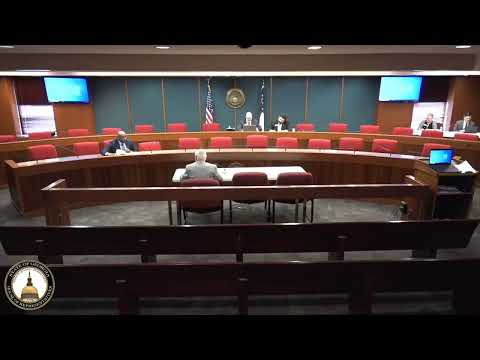
Committee approves licensing, oversight for human composting facilities
Summary
Senate Bill 241 (LC 550530) would add "organic human reduction facility" to existing funeral-service law, require licensing and inspections for human composting operations, and apply many of the same facility standards required of funeral homes and crematories; the committee voted to pass the bill.
Senator Williams introduced Senate Bill 241 (LC 550530) to the Regulated Industries Committee as a proactive measure to regulate human composting, sometimes described in the testimony as "organic human reduction." He said the bill would establish licensing, inspection and equipment requirements for facilities performing human composting and add that facility type to current law governing funeral services.
"So my bill is a proactive bill and is putting up safeguards so that anyone that wants to do this is gonna be have to be licensed," Senator Williams said, describing recent incidents in other states where lack of regulation led to problems. He cited a high-profile case in Noble, Georgia, where limited oversight contributed to failures, and an incident in Colorado this year where investigators found 18 decomposing bodies at a facility and families reported delays and lack of communication.
Senator Williams told the committee the measure would apply the same basic facility standards already required for funeral homes and crematories, such as a space for gatherings (the transcript referred to a provision about a room that can accommodate 30 people), and would require licensing and inspections by the State Board of Funeral Service or the appropriate regulatory authority. He said the bill would make the treatment of human composting facilities uniform with other licensed funeral-service operations.
Committee members asked clarifying questions about specific lines in the draft language (lines 362 through 379 in the working copy) and whether provisions about assembly space and other facility standards were already required for licensed funeral-service facilities; the sponsor said those standards are already in existing law and the bill would simply extend them to organic human reduction facilities.
After brief discussion, a committee member moved to pass the bill; the committee seconded the motion and approved it by voice vote. The transcript records the motion, a second, and a voice vote in which members responded "aye;" no roll-call tally was recorded.
Context: Senator Williams framed the bill as a response to gaps in state regulation that have led to consumer complaints and enforcement actions elsewhere, and said the bill is intended to prevent similar failures by requiring licensing, inspections and equipment standards before a facility can operate. The transcript does not include testimony from funeral directors, patients' families beyond the sponsor's examples, nor an independent cost estimate for licensing or inspection programs.