Get Full Government Meeting Transcripts, Videos, & Alerts Forever!
Get email alerts on the School Budget topic
No spam. Unsubscribe anytime.
Mount Olive school leaders outline preliminary 2025–26 budget with targeted staffing, $4M in capital projects
Summary
Superintendent Dr. Bangea and Business Administrator Nicole Schoning presented a preliminary 2025–26 budget that trims state aid compared with last year’s windfall, adds personnel for special education and multilingual services, and proposes about $4 million in capital work including a track/turf replacement and modular transportation office.
Mount Olive Township School District Superintendent Dr. Bangea and Business Administrator Nicole Schoning presented the board with a preliminary 2025–26 budget that builds staff capacity, advances several capital projects and accounts for a roughly $340,000 reduction in state aid compared with the prior year’s one-time increase.
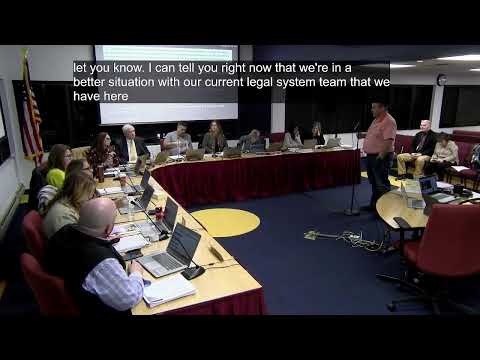
The presentation, given at the March 10 board meeting, outlined personnel additions the administration says are intended to expand academic and special-education services. Those additions include an elementary gifted-and-talented teacher, another elementary multilingual teacher, a new sixth‑grade team to smooth the transition between elementary and middle school, an additional high‑school English teacher, an in‑class resource teacher at the high school, an additional clinical social worker/interventionist, and added special‑education staff including an autism spectrum disorder classroom at SandShore with accompanying ABA staff and paraprofessionals, an ABA specialist, elementary occupational therapists, a shared physical therapist for the middle and high schools, and another child study team member.
Nicole Schoning, the district’s business administrator, told the board the administration aims to bring some related services in‑house — for example, hiring therapists as district employees rather than contracting the services — which the presentation said should be a net cost benefit over time. The technology plan included replacement of end‑of‑life student devices (Chromebooks, laptops, desktops), continued purchases of interactive classroom boards, and an additional technician position to support staff and devices.
The capital reserve portion of the proposed budget totals “a little over $4,000,000,” the presentation said. Highlighted projects included boiler and roof replacements, continued completion of a multi‑phase middle‑school door‑lock project and a new public‑address system at the middle school, several parking‑lot expansions and playground additions, and a high‑school track and turf replacement priced “close to a million dollars.” The administration said the proposed turf has an extended warranty and avoids rubber infill pellets. The plan also includes a modular office building for the transportation depot to provide meeting and break space for drivers.
Schoning reviewed the district’s reserve activity: an opening capital‑reserve balance of about $7.2 million, a $1.2 million withdrawal to support the current year, anticipated interest earnings and a planned $2.0 million deposit before the end of the school year. The net effect, the presentation said, would leave the capital reserve approaching $9.0 million before the administration draws about $4.0 million to fund the proposed 2025–26 capital projects.
The presentation estimated overall general‑fund revenues up about 4.5 percent. The district’s prior‑year one‑time state aid increase was roughly $5.1 million; the administration said the Department of Education indicated the district should expect a lower amount this year, and the administration modeled a worst‑case 3 percent reduction before the department issued its final figures. Schoning said the district ultimately budgeted anticipating a modest decline of about $340,000 from the prior year’s unusually high state aid.
On property taxes, Schoning explained how the tax levy is calculated and reported a proposed general‑fund tax levy increase of 3.88 percent. Because the district’s ratables (property valuation) rose about 5 percent, the presentation showed average tax bills declining slightly: using the district’s example of an average assessed home at $325,000, the presentation estimated an annual net tax change of about a $160 reduction when debt service and valuation increases are combined.
The administration said the district plans to continue curricular investments, including K–5 ELA review, renewal of elementary and middle‑school math resources with a focus on Conquer Math through geometry, expanded professional development and targeted supports for multilingual learners.
Board members asked clarifying questions about state aid components (equalization aid, transportation aid, special‑education aid and security aid) and about the assumptions the administration used when budgeting federal and special‑revenue carryovers. Schoning said certain federal grant carryovers from 2023–24 reduced the revised budget for 2024–25 and therefore were not carried forward into the proposed 2025–26 revenue lines at the same levels.
The board announced that the final public budget hearing is scheduled for April 28, 2025; no final budget vote was recorded at the March 10 meeting. The administration said the full budget materials and the presentation would be posted on the district website for public review.
Why it matters: The proposed budget commits new staff and resources to multilingual and special‑education services and plans capital spending on safety‑related projects (door locks, PA system) and high‑use athletic facilities. The administration emphasised using reserves and one‑time federal or state receipts carefully, noting last year’s $5.1 million state aid increase was not expected to recur in full.