Get Full Government Meeting Transcripts, Videos, & Alerts Forever!
Get email alerts on the Urban Renewal topic
No spam. Unsubscribe anytime.
Caldwell staffseek direction on new urban renewal area to revitalize North End
Summary
City staff and commissioners at a Caldwell workshop discussed reopening an urban renewal allocation for the North End and central Caldwell, reviewing past work by the housing authority, proposed boundaries (80 to 1,440 acres), and projects including sidewalks, parking, Indian Creek improvements and affordable housing. No formal action was taken.
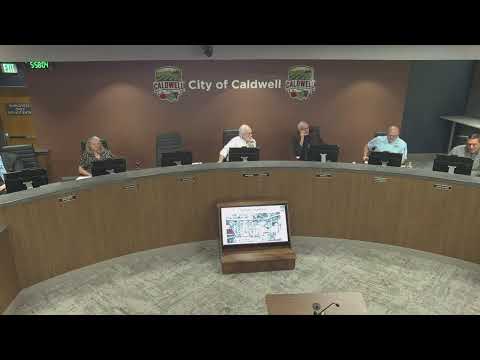
Caldwell officials and staff on Wednesday reviewed proposals to create a new urban renewal allocation area focused on the city’s North End and central Caldwell, seeking direction on the district’s boundary and a project list that could include sidewalks, streetscape, parking and affordable housing.
The workshop opened with Mike Dittenburg, director of the Caldwell Housing Authority, who reviewed prior neighborhood revitalization efforts and the housing authority’s role in building small-lot and “age-in-place” homes in the North End. “My name is Mike Dittenburg. I’m the director of the Housing Authority for the City of Caldwell,” he said, and he recalled a 2014 resolution and earlier committees that studied the neighborhood’s needs.
The issue matters because urban renewal tools would let the city use tax-increment financing to fund infrastructure and incentive projects in a defined area, while also raising concerns about displacement and long-term affordability. “I would give the commission a thumbs up today to move to move something,” Dittenburg told commissioners, urging action rather than delay.
City staff member Steven Jenkins reviewed maps and a history of prior proposals, saying an initial concept presented in 2023 covered about 80 acres in the downtown core and that subsequent proposals expanded the footprint — in one plan up to roughly 1,440 acres — reaching as far north as the I-84 corridor. Jenkins described a menu of potential projects: sidewalk and streetscape upgrades, bulb-outs and curb extensions, parking improvements and paid parking controls, Indian Creek enhancements, bridge and railroad right-of-way work, gateway signage, playground and park improvements, and site-specific plans such as the Domes Church parcel.
Jenkins also outlined economic goals and examples of redevelopment in the region, noting that an earlier Caldwell East Urban Renewal District saw assessed value growth from about $60 million to $1.4 billion by 2023. He summarized the purpose of the workshop as a request for clearer direction from the commission on the proposed footprint and project list so staff can prepare a formal “deteriorating area” resolution to take to council.
During discussion, commissioners and attendees raised recurring concerns about safety, infrastructure and housing affordability. Commissioners asked about alley conditions, trash collection, fire access and large commercial vehicles parked in residential streets; Dittenburg said alley widths and obstructed alleys have been longstanding problems and urged a full review that could include fire department input. “Having a good, healthy, wide alley … equals healthier housing,” he said.
Several speakers discussed gentrification and the limited options for lower-income residents if investment raises housing costs. Commissioner Nicole asked what would be available for lower-income residents if they are displaced; Dittenburg said rental supply for lower-income households is limited and that rising construction costs and potential federal budget cuts make immediate solutions difficult. “My advice to people now is do whatever you can to stay where you’re at,” he said.
Staff and commissioners cited recent and ongoing affordable projects in the study area as examples of possible approaches: Autumn Gold’s cottage-home project east of the Domes Church site, a prospective Devco affordable housing proposal at the Domes Church parcel, and other projects cited by staff that aim to include varying area median income (AMI) levels. Jenkins noted such projects often require gap financing and are competitive for tax credits: “It’s an arduous process, very long and pretty competitive these days.” He recommended inviting developers or Idaho Housing officials to explain gap‑financing and tax‑credit processes to the commission.
On the taxation question, Jenkins said urban renewal does not directly increase a property owner’s taxes at the time the district is formed. Instead, the district freezes a base assessed value; taxes on increases in assessed value are directed to the urban renewal fund for the plan’s life. “Urban renewal districts don’t arbitrarily raise taxes,” Jenkins said, explaining the tax increment mechanism and adding that eventual growth in assessed value can increase taxes paid on that higher value.
Staff described the process steps remaining to create a new area. City staff member Mr. Hilty summarized the work flow: the commission must first provide a footprint and project scope so staff can complete detailed analyses, prepare a “deteriorating area” resolution and bring the matter back to council. Hilty said the work is still at the idea stage and that decisions on boundary size and project priorities would allow staff to move to the next phase.
Commissioners voiced differing priorities but reached no formal decision in the workshop. Some argued for starting a renewal plan now so tools are available when proposals emerge; others suggested additional outreach or consultant input such as a market or downtown activation study could refine the project list. The workshop concluded with staff asking for explicit direction on the footprint and the projects the commission wants considered in a future proposed plan.
No motions or votes were recorded at the workshop. The commission asked staff to return with more detailed options once commissioners provide guidance on boundary and priorities.