Get Full Government Meeting Transcripts, Videos, & Alerts Forever!
Get email alerts on the Homelessness Housing topic
No spam. Unsubscribe anytime.
Committee narrows interim-housing-for-hotels ordinance, adopts first amendments and continues item for further review
Summary
The committee adopted a first set of amendments to an ordinance that would allow tourist hotels and motels to operate as interim housing without losing their hotel land-use designation, narrowed provisions to enable a planned sober-living pilot and continued the ordinance for further referral and final action on March 17.
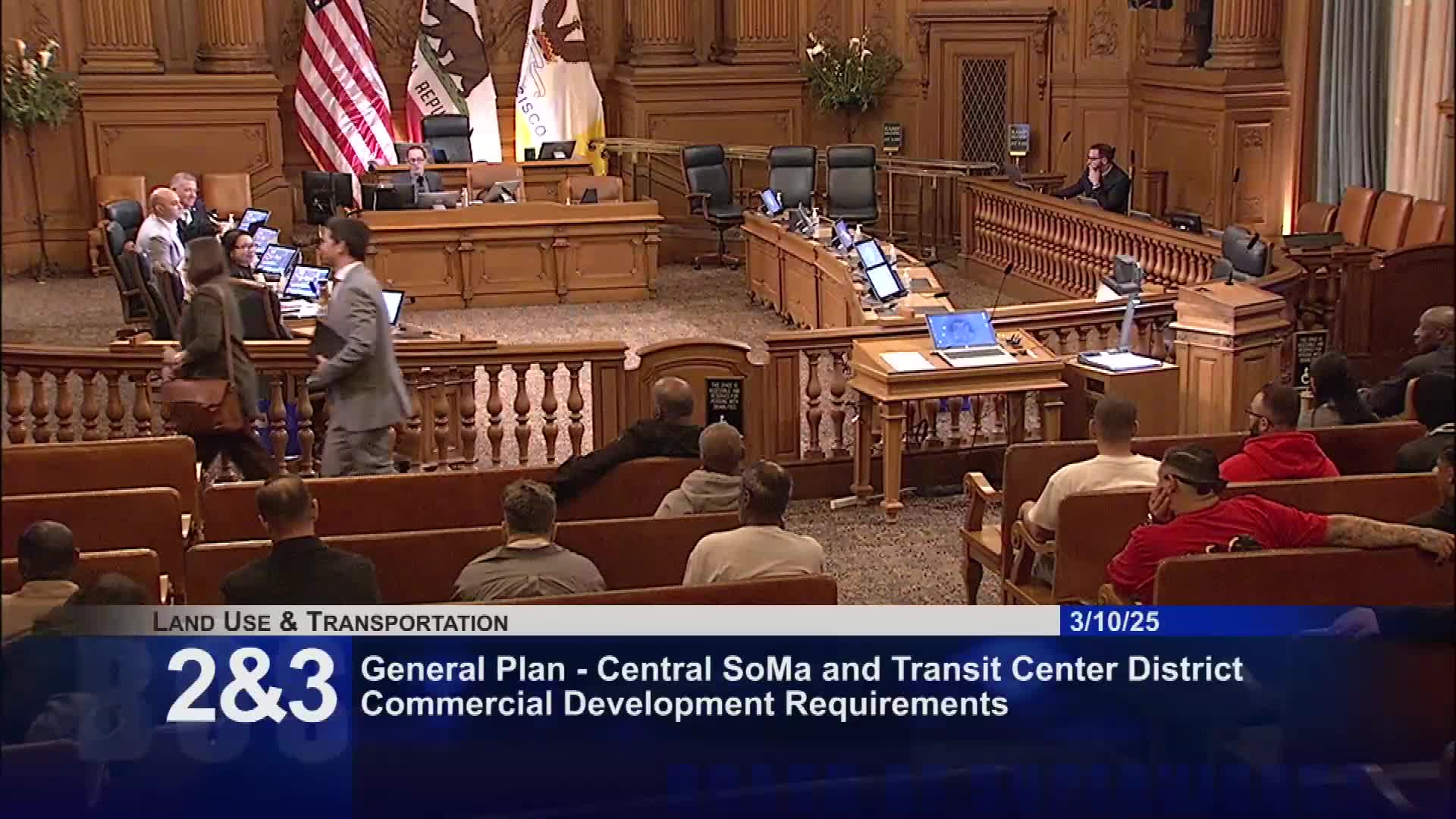
The Land Use and Transportation Committee adopted a first set of amendments March 10 to an ordinance that would allow tourist hotels and motels to be used for interim housing without abandoning their hotel land-use designation, then continued the ordinance to allow more time for review and referral on additional changes.
The ordinance, as originally drafted, amends the Planning Code to authorize interim housing at hotels and motels without discontinuing their hotel classification, amends the Building Code to permit interim housing without changing occupancy classification, and removes an Appendix P restriction that emergency housing be located only on City-owned or leased land. The Department of Homelessness and Supportive Housing (HSH) said the tool is intended to encourage more hotel owners to partner with the City to open shelter in a wider set of neighborhoods.
Deputy Director Emily Cohen of HSH told the committee that, after months of stakeholder engagement, staff proposed amendments to narrow the ordinance’s scope in response to labor and neighborhood concerns and to specifically authorize an up-to-two-year sober-living transitional housing pilot at the Civic Center Motor Inn, operated in partnership with nonprofit providers. Cohen said the ordinance would allow a hotel owner that enters into an interim-housing agreement to apply to retain tourist status at the end of the interim use without undergoing an onerous reclassification process.
The amendments read into the record included findings that HSH will work with interim housing providers to relocate program participants prior to closure, that HSH seeks to encourage retention of existing staff where feasible, and that historical Shelter-in-Place (SIP) hotels should be allowed to reestablish tourist status once they wind down emergency shelter functions. HSH staff identified three SIP-related properties in the amendment language and described a proposal to authorize reestablishment of hotel use for those sites under specific conditions.
Public comment at the hearing was largely from service providers, program residents and recovery advocates who backed the sober-living pilot. David Murphy, a participant in Salvation Army programs, told the committee the pending sober-living program “is critical for opening the pending sober living transitional housing program, and we respectfully, strongly urge that you do not delay.” Multiple residents and service providers described the need for sober-living and transitional housing capacity.
Labor representatives raised concerns about the timing and text of late-filed amendments and urged more time to review potential impacts on union-represented hotel workers. Cynthia Gomez of Unite Here Local 2 asked for additional time to analyze the final text and stressed the difficulty of preserving pension and benefit levels even if rehiring is sought.
The committee adopted the first, non-substantive set of amendments (as described on the record) by recorded vote, then voted to continue the ordinance — as amended — to the March 17, 2025 meeting to permit additional review and to process a duplicate file that would incorporate substantive amendments requiring Planning Commission referral.
The clerk recorded aye votes on the amendments and on the continuation from Vice Chair Cheyenne Chen, Member Mahmood and Chair Mirna Melgar.