Get Full Government Meeting Transcripts, Videos, & Alerts Forever!
Get email alerts on the Student Device Policy topic
No spam. Unsubscribe anytime.
Camas board reviews CAC draft for student cell phone policy, asks for vetting and procedural clarifications
Summary
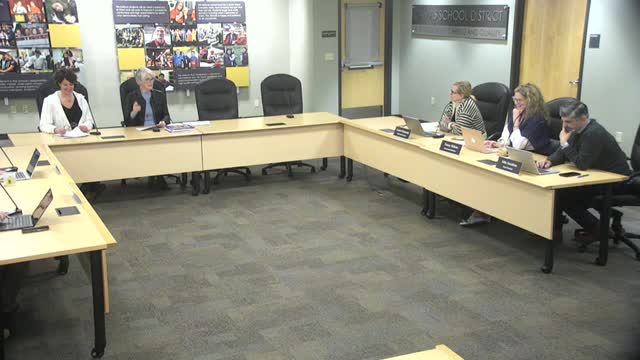
The Camas School District board discussed a Citizens Advisory Committee recommendation to replace the district's student device policy, asking staff to vet the CAC draft with principals, cabinet and legal counsel before bringing it to the board for formal readings.
The Camas School District board discussed a Citizens Advisory Committee (CAC) recommendation to replace the district's existing student telecommunication-device policy and asked staff to refine the draft, run it past principals and cabinet, and have legal counsel review it before bringing it to a formal reading.
Board members said the CAC's draft — which separates expectations for elementary, middle and high school and emphasizes teacher support and restorative practices — addressed concerns about classroom engagement more clearly than the older policy. "I really appreciate that you broke out elementary, middle and high school; that wasn't in the old policy," a board member said, adding that the clearer categories help teachers and families understand expectations.
Why it matters: The district has been operating under an older device rule. The CAC's draft aims to define permitted and prohibited uses more precisely, outline supports for teachers (for example, phone "caddies" to store devices during class) and set a framework for restorative responses before punitive discipline where appropriate. Board members emphasized that policy should state principles and that detailed enforcement rules belong in procedures the administration can adapt.
What the board discussed most: - Device definitions and examples: Board members asked that the policy include a catchall phrase such as "including, but not limited to" when listing telecommunication devices (cell phones, smartwatches, earbuds, programmable calculators) so administrators have recourse if a device type not explicitly listed becomes disruptive. A CAC presenter noted the current policy already uses a similar phrasing for recording or intercepting devices.
- Procedure versus policy: Several board members urged that policy state the district's expectations and that the specifics of enforcement (steps for confiscation, parent notification, appeals, bus procedures) be moved into separate procedures so building administrators can adjust operationally without returning to the board. "The policy says what; the procedure says how," a board member said.
- Confiscation and bus drivers: The draft limits confiscation language in some places to bus drivers, prompting questions about whether all staff should retain the ability to confiscate when safety or instruction is affected. The CAC presenters explained bus drivers asked to be explicitly supported in the draft because buses lack caddies or other storage; board members asked staff to consider a consistent approach across staff roles and bring options back.
- Restorative practices and discretionary discipline: Board members voiced support for prioritizing restorative approaches but warned the policy should not prevent staff from using disciplinary measures when immediately necessary. One member said the policy should emphasize restoration and education but not create an inadvertent requirement that restorative steps precede any punitive response.
- Funding for classroom supports: Board members asked who would purchase suggested classroom supports (phone caddies, device bins). CAC members said the committee recommended that, if the board adopts the policy, central office would fund districtwide resources to avoid unfunded mandates at school sites; board members asked staff to confirm funding sources and whether this language belongs in procedure.
- Implementation steps and timeline: Board members and CAC presenters agreed the next steps are to: (1) send the CAC draft to principals and cabinet for feedback, (2) ask district legal counsel to review the policy language and identify elements that should instead be procedure, and (3) return to the board with a revised draft and recommended next steps toward a first reading.
Direct quotations are restricted to meeting speakers listed in the district record. Two CAC presenters, identified in the meeting as John and Leanne, noted the draft's emphasis on engagement and the need for clear categories for elementary, middle and high schools. A board member said, "I really appreciate that you broke out elementary, middle and high school; that wasn't in the old policy." Another board member urged that the policy not tie administrators' hands on immediate safety decisions: "I don't want to create an inadvertent loophole because I... don't want staff prevented from taking the right action when necessary."
What the board directed staff to do - Solicit feedback on the CAC draft from principals and cabinet and return recommended edits. - Ask district legal counsel to advise which elements should remain policy and which should be written as procedures (confiscation process, appeals, bus-driver authority, purchasing/implementation logistics). - Clarify funding: confirm whether central office would cover classroom "caddies" and other resources if a new policy is adopted.
Next steps and timeline: Board members said this workshop conversation was an early check-in, not a formal vote. Staff and CAC representatives said they would continue refining the draft and expected additional vetting with building leaders and legal counsel before placing the policy on the board's regular meeting agenda for the standard first, second and third readings.
Ending: Board members thanked the CAC for the work and asked staff to return with a revised draft and the cabinet's feedback. The workshop closed with those follow-up assignments but included no formal board action or vote.