Get Full Government Meeting Transcripts, Videos, & Alerts Forever!
Get email alerts on the Earned Income Tax Credit topic
No spam. Unsubscribe anytime.
Assembly committee hears bill to set $300 minimum for California EITC; cost estimate discussed
Summary
AB 398 would guarantee a minimum $300 Cal EITC benefit for eligible filers; sponsors and United Way representatives described anticipated impacts while committee members discussed estimated first-year fiscal costs and eligibility questions. The bill was placed on the suspense file.
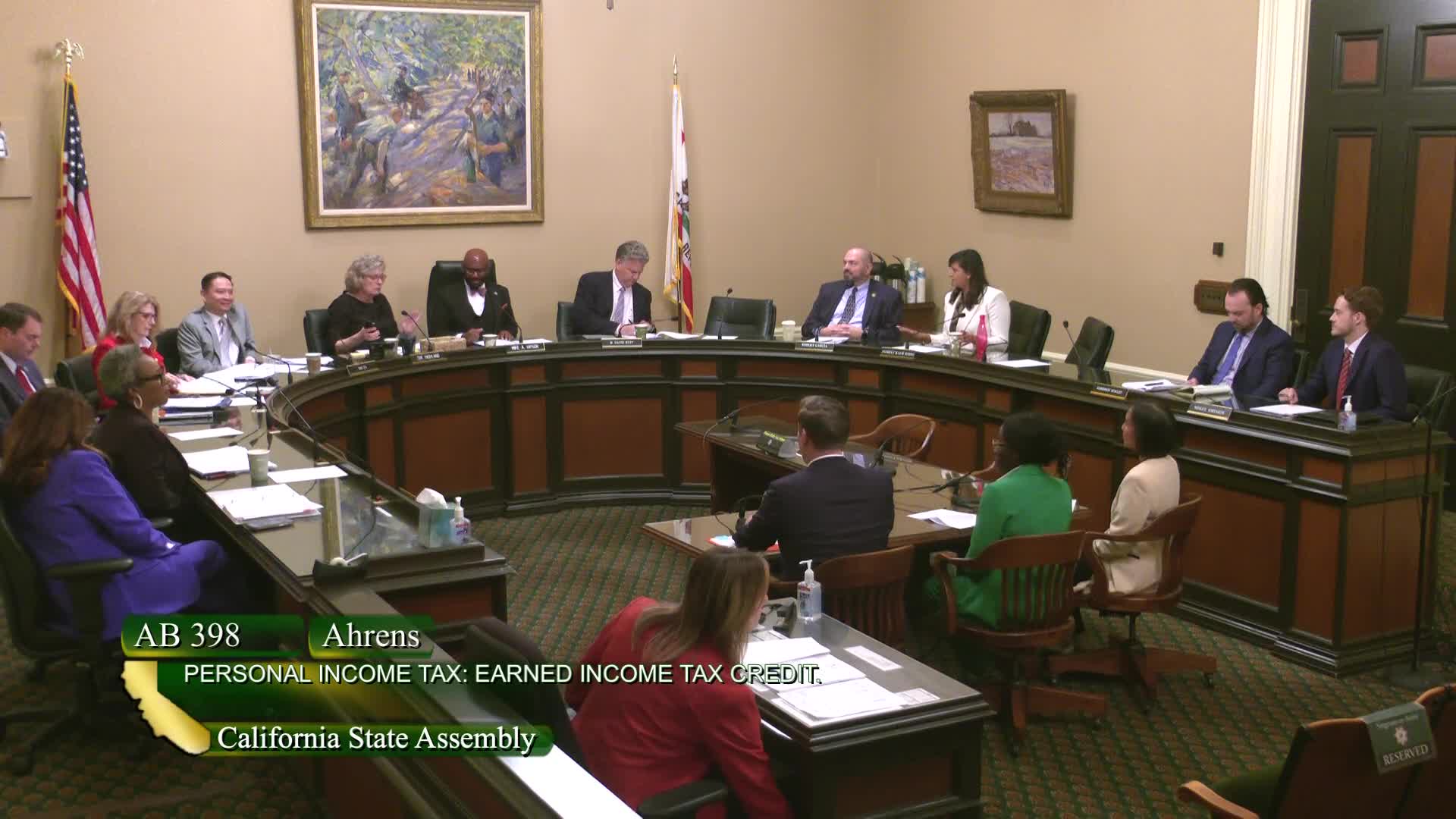
Assemblymember Aarons presented AB 398, which would establish a minimum $300 benefit for the California Earned Income Tax Credit (Cal EITC) for eligible filers. The committee placed the bill on the suspense file.
Aarons said the measure aims to make the credit more meaningful for low-wage workers, particularly those without children. United Way witnesses described outreach work and the tax-refund benefits returned to local communities through Volunteer Income Tax Assistance (VITA) programs.
United Way's senior counsel of public policy, Adriel (Pedro) Okoro, said establishing a $300 minimum would increase the incentive to file and simplify administration. He cited data showing that many Cal EITC recipients currently receive very small amounts: according to the testimony, 88% of recipients received less than $300 in the 2021 tax year and many childless filers receive under $100. Witnesses estimated the bill would impact millions of low-wage workers when fully implemented.
During questioning, a committee member asked about projected fiscal cost; a figure was cited in the hearing as approximately $225 million for the first year of implementation. Committee members debated broader affordability and policy trade-offs in tax policy.
Action and next steps: The committee designated AB 398 as a suspense candidate; no roll-call vote on passage was recorded at the hearing.
Ending: Supporters said a minimum would increase the credit's usefulness and deliver cash to struggling households; critics questioned whether tax-credit expansions were the right approach versus other affordability policies. The bill proceeds to suspense-file fiscal review.