Get Full Government Meeting Transcripts, Videos, & Alerts Forever!
Get email alerts on the Public Health Education topic
No spam. Unsubscribe anytime.
University of Memphis presents high‑school public‑health dual‑enrollment, clubs and hackathons to county committee
Summary
Dr. Ashish Joshi, dean of the University of Memphis School of Public Health, described a dual‑enrollment pathway, public health clubs, a CDC grant and student engagement programs aimed at building a local public‑health workforce and community awareness.
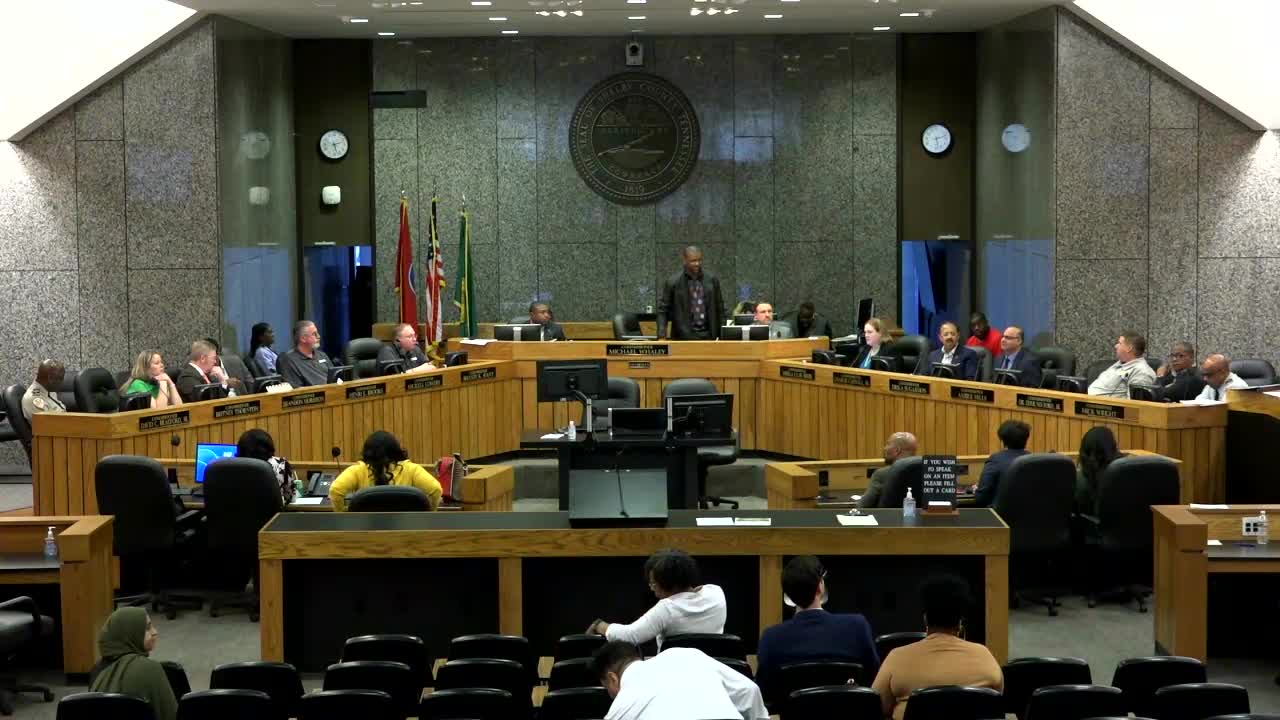
At a Feb. 27, 2005 ad hoc public safety committee meeting, Ashish Joshi, dean of the University of Memphis School of Public Health, described the school’s community‑engaged programs, including a dual‑enrollment high‑school pathway, public‑health clubs and a student hackathon series aimed at increasing youth interest in public‑health careers.
Joshi said the school—opened under his leadership about two and a half years ago—has prioritized community engagement and experiential learning. He said the school has increased research funding from roughly $1.8 million to about $27 million since his arrival, established an office for experiential learning and created scholarships totaling about $500,000.
On the dual‑enrollment pathway, Joshi said the University of Memphis is the nation’s first school of public health to establish dual enrollment for high school students and that the program enables juniors and seniors to take public‑health courses that can be credited toward an undergraduate degree. He said funding from the Centers for Disease Control and Prevention of roughly $200,000 supports the model and that students who complete the two‑year pathway may qualify for a disease intervention specialist credential and job opportunities. He also described an accelerated bachelor’s‑to‑master’s option that allows eligible undergraduates to take 12 graduate credits at undergraduate tuition rates.
Joshi listed participating high schools that have adopted public‑health clubs or dual‑enrollment courses, including Central High School, Collierville, White Station, Soulsville and University High, and said more than 40 other district schools have requested the program. He described a student hackathon that drew about 89 participants from local schools and international partners and said the program has received national and international attention.
The dean emphasized curriculum pillars beyond specific content—coping skills, adaptability, resilience and empathy—and said the school aims to build “public‑health ambassadors” who can promote preventive health in families and communities.
Commissioners and other meeting participants tied the university’s outreach to broader public‑safety goals: Commissioner Charlie Cashwell suggested youth trained through the program could become correctional officers with public‑health training, and committee members discussed connecting school programs with community services and district connectors working on root causes of crime.
Joshi concluded by noting the school received the Dr. Harrison C. Spencer award in 2024 for community engagement and said the university is expanding student placement and career readiness programs. He offered to follow up with county staff to share the school’s report and resources.
No county action or funding decision was made at the meeting; Joshi said the school will continue outreach and provide materials to committee members.