Get Full Government Meeting Transcripts, Videos, & Alerts Forever!
Get email alerts on the Youth Program Evaluation topic
No spam. Unsubscribe anytime.
Commission approves $62,500 state grant for impact study of Switch youth program after debate over coordination with juvenile court
Summary
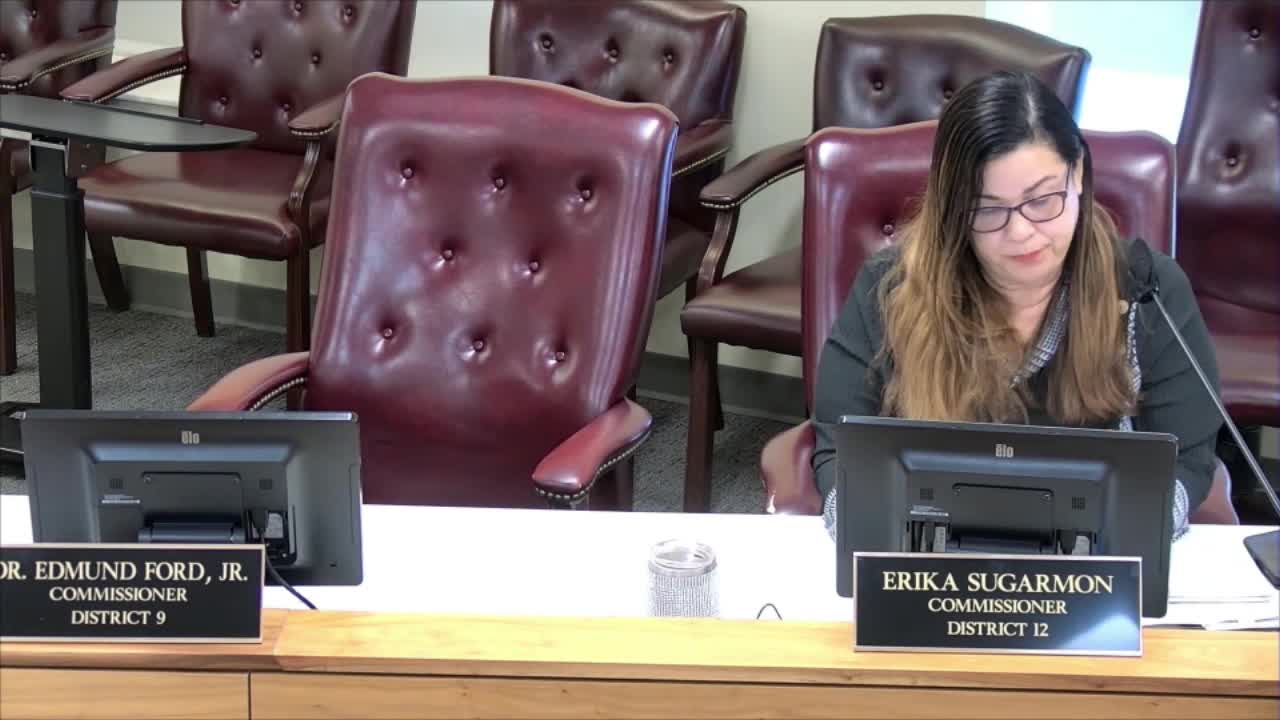
The Board’s law enforcement committee approved accepting $62,500 in state grant money to pay the THEMIS Center for an impact evaluation of the Switch youth program after debate and a procedural reconsideration; some commissioners asked for more coordination with juvenile court and corrections during the study.
Shelby County’s law enforcement committee voted to accept a $62,500 grant from the Tennessee Office of Criminal Justice Programs to fund an impact evaluation of the Switch youth program. The grant and appropriation would allow the County to contract with the THEMIS Center for Justice Policy, Practice & Research to conduct a formal study of the program’s outcomes.
Commissioners discussed program details and oversight before the vote. Commissioner Henry Brooks asked presenters for clarification about how Switch operates and whether it is run by the Sheriff’s Office; Katie Mack, grants manager with the Shelby County Sheriff’s Office, said the Sheriff’s Office is administering the grant but not operating Switch — another agency runs the program and Switch receives referrals from juvenile court. Commissioner Brooks and others asked that juvenile court, corrections officials and the incoming judge be involved in planning the evaluation so it would reflect ongoing transitions in detention and case handling.
Committee debate included a procedural motion to reconsider after an initial deferment; that motion passed 4-2, and the committee then voted 5-2 to approve accepting the state funds and appropriating $62,500 for the THEMIS Center study. Supporters said an independent impact study is necessary to measure effectiveness and to meet the grantor’s reporting requirements. Opponents argued for deferral so juvenile court, corrections and other local partners could shape the study’s design. Supporters noted the study does not require transfer of program operations and that the evaluation can proceed while local coordination continues.
Why it matters: The Switch program targets youth violence prevention; a formal impact evaluation can inform decisions about program continuation, replication and county investments. Commissioners pressed for stronger local coordination so the study samples and measures reflect real-world case flows between juvenile court, detention, and community providers.
What’s next: The county will accept and appropriate $62,500 in FY2025 state grant funds for the THEMIS Center study. County staff were asked to consult juvenile court and corrections on study design and to bring additional program documentation back to commissioners if requested.