Get Full Government Meeting Transcripts, Videos, & Alerts Forever!
Get email alerts on the Hospital Staffing And Affiliations topic
No spam. Unsubscribe anytime.
Hospital affiliation and staffing bill faces pushback from hospital association amid concerns about state interference
Summary
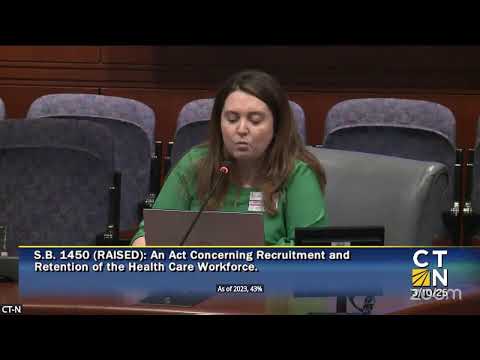
Hospital association leaders warned the Public Health Committee that proposed new oversight of hospital staffing and physician affiliations would slow operational flexibility and could impede patient care, while lawmakers cited recent affiliation cases as proof that some additional protections are needed to preserve local access.
Senate Bill 1452, which would require hospitals to provide advance notice to the state and to the Office of Health Strategy before altering physician staffing arrangements and would restrict certain terminations absent performance or conduct issues, drew opposition from the Connecticut Hospital Association at a March 10 hearing.
CHA’s position: CHA told the committee that oversight already exists through accreditation and federal survey processes and that hospitals must retain flexibility to manage staffing and ensure patient safety. Paul Kidwell of CHA said the bill "creates another CON‑type process" that could limit operational decisions and impede timely responses to changing clinical demand. CHA argued that a 180‑day notice window in the bill could mean the state effectively takes control of hospital staffing decisions for a year if OHS exercises a review window.
Legislative concern and examples: Committee members described recent episodes in which hospital systems enacted wide staffing changes after affiliating with out‑of‑state entities; some members said these changes reduced physician autonomy and harmed local access. Those concerns motivated the bill’s authors. Physicians and other clinicians who spoke separately cited anxiety about changing employer obligations and the ability to deliver patient care under new models.
Clinical safeguards vs operational autonomy: CSEP (the emergency physicians’ society) and other physician groups expressed concern about extremes in workload and asked the committee to focus on staffing levels that preserve patient safety. Emergency physicians told the committee that arbitrary caps on physician patient loads could have perverse consequences when inpatient admitting physicians are capped and patients backlog in the emergency department.
Next steps and amendments: CHA asked the committee to leave operational staffing decisions with hospital leadership and not to impose a new statutory review process. Several legislators said the bill’s intent is to protect access to care and clinician work conditions and that they will continue working with hospitals and physicians to craft specific language that minimizes operational disruptions while preserving patients’ access to care.
Ending: The hearing revealed a balance lawmakers will need to strike: prevent abrupt, organization‑wide changes that can harm local access while preserving hospitals’ ability to react to emergent patient needs and manage complex staffing challenges.