
Oklahoma Senate restores natural gas preference in power planning, requires other sources to justify alternatives
Get AI-powered insights, summaries, and transcripts
Sign Up Free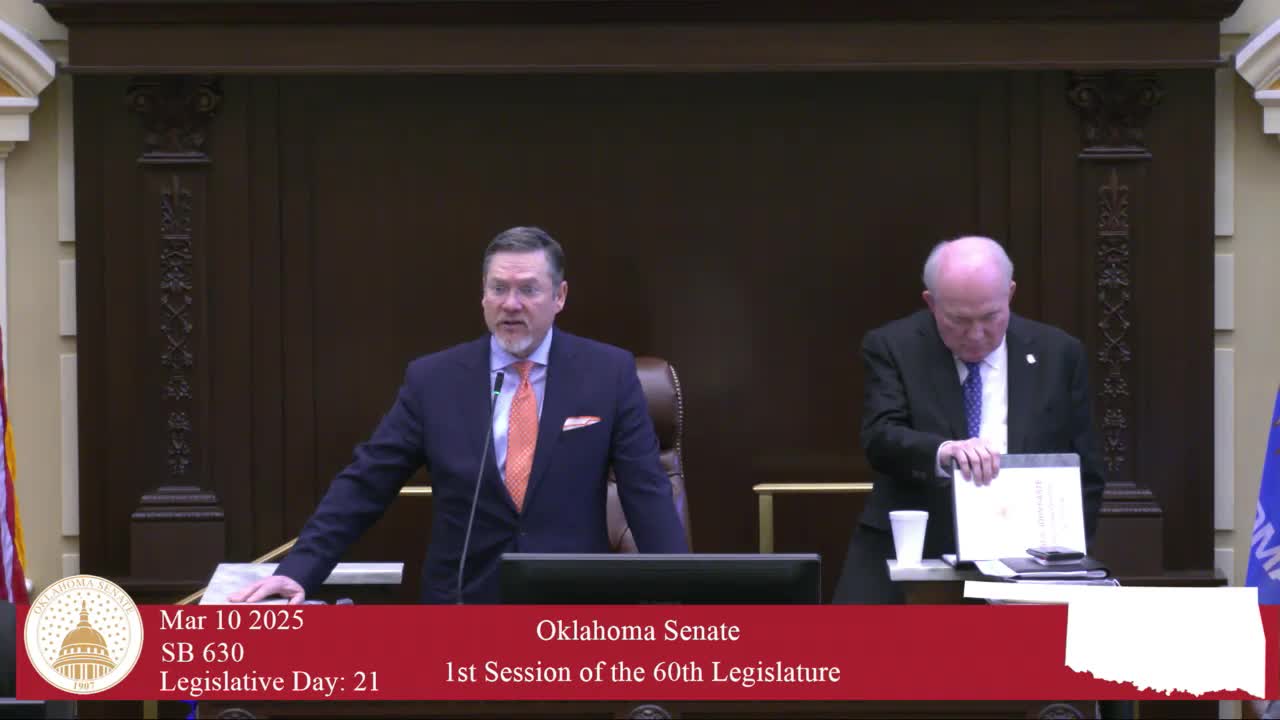
Summary
The Oklahoma Senate passed SB 460 to remove a sunset and designate natural gas as the state's preferred electricity generation source, prompting debate over whether the change favors one industry and creates new regulatory hurdles for other energy sources.
The Oklahoma State Senate on March 10 passed Senate Bill 460, removing an expired sunset and striking the phrase "fossil fuel" from statute to reaffirm natural gas as the state's preferred electricity generation source while requiring other generating entities to show cause to the Oklahoma Corporation Commission if they seek to use a different fuel.
Supporters said the change reflects Oklahoma's natural-gas resources and aims to protect reliability for ratepayers. Opponents said the measure creates a presumption that natural gas need not demonstrate it is in ratepayers' best interest while placing a new procedural burden on solar, wind, nuclear and other alternatives.
Senator Joe Green (author) said the bill removes an outdated sunset and the two words "fossil fuel," and preserves the commission's authority to approve other sources when appropriate. Green said the Southwest Power Pool and others emphasized that natural gas supports grid reliability and that the bill is in the interest of consumers.
Senator Lynda Boren pressed the author on whether other sources would be required to appear before the Corporation Commission to justify alternatives; Green answered that designation of natural gas as the preferred source means other sources may have to provide evidence showing their chosen fuel is in the best interest of the state's electric consumers. Senator Boren and others characterized that requirement as a variance process that would effectively make non‑natural‑gas options demonstrate superiority to obtain approval.
Senator Allison Bourne and others warned the bill could embed a presumption that forecloses competition and increases legal costs for developers of alternate sources. Bourne said forcing other sources to hire attorneys to seek variances would raise costs that ultimately fall to ratepayers.
The measure drew floor debate on reliability, cost and market effects. Supporters pointed to Oklahoma's abundance of natural gas and industry employment, while critics argued the bill codifies a regulatory preference that could slow innovation and investment in non‑gas generation.
The Senate recorded 39 aye votes and 8 nay votes; the measure was advanced as an emergency. The statute language will now be transmitted for enrollment consistent with the Senate's vote.
Questions remain about how the Corporation Commission will apply the variance process to particular projects and whether the change will affect pending or planned generation proposals.
Votes at a glance: Senate Bill 460 — Passed 39–8; advanced as an emergency.