Get Full Government Meeting Transcripts, Videos, & Alerts Forever!
Get email alerts on the Justice Of The Peace topic
No spam. Unsubscribe anytime.
Connecticut committee hears broad support, questions for Justice of the Peace training bill
Summary
Witnesses and lawmakers at the Planning & Development Committee hearing urged mandatory training, periodic recertification and greater appointment transparency for Justices of the Peace while raising questions about fees, portability and enforcement.
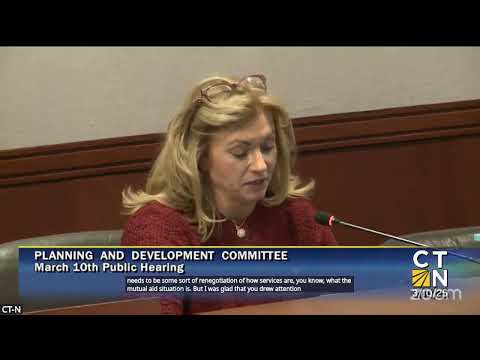
A group of state and national witnesses, town clerks and practicing Justices of the Peace told the Planning & Development Committee on March 4 that House Bill 7150, which would require testing, training, misconduct definitions and a working group for JPs, is long overdue.
Supporters said the bill addresses several problems: there currently is no required training or periodic re‑certification for many Connecticut JPs, appointment procedures can be inconsistent across municipalities and some unaffiliated or minor‑party appointees have limited opportunities to be named between presidential election cycles. Proponents pressed that training could reduce errors on vital records, help JPs spot coercive or fraudulent marriages and ease administrative burdens that town clerks now shoulder.
Testimony came from the Justice of the Peace Association’s managing member, who said the association’s members favor mandatory training and that the group already provides free online training modules on forced marriage, recognition of trafficking indicators, and administrative procedures. Practicing JPs who testified described routine problems the bill would target: mistakes on marriage certificates, confusion about which town’s license is valid, and gaps in recordkeeping and portability when JPs move between towns.
Lawmakers pressed witnesses about several implementation details the bill currently leaves vague: whether any required examination would carry a fee and, if so, how large; whether an exam or certification would be one‑time or require periodic recertification; and how the working group in the bill would be constituted to represent large, medium and small municipalities. Witnesses generally urged the committee to let the working group advise on fees and recertification intervals and recommended that working‑group membership include town clerks, current and newly appointed JPs and representatives of advocacy groups.
Some legislators and witnesses also raised questions about enforcement, the consequences for JPs who fail required training, and how the state would handle ordained but unregistered officiants who currently may solemnize marriages without any tracking mechanism. Several witnesses suggested a parallel change: a civil marriage officiant registry or certification that would apply to non‑JP officiants in order to provide consistent oversight.
Committee discussion ranged from protecting vulnerable persons (concerns about human‑trafficking indicators and forced marriage) to administrative questions (who pays for an exam, if any) and operational clarifications (whether town clerks should be allowed to appoint unaffiliated JPs year‑round). Supporters urged the committee to pass HB 7150 with the working‑group mandate intact so those implementation details can be resolved through stakeholder consultation.