Get Full Government Meeting Transcripts, Videos, & Alerts Forever!
Get email alerts on the Biofuel Infrastructure topic
No spam. Unsubscribe anytime.
Committee considers expanding biofuel infrastructure grants and eligibility, approves an amendment increasing applicant scope
Summary
Senate File 1507 would provide $4.5 million in 2026 and $4.5 million in 2027 for biofuel infrastructure grants; the committee approved an amendment expanding program eligibility and laid both related bills over for possible inclusion.
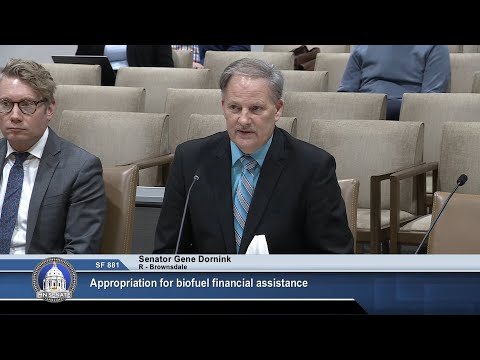
Sen. Dornick told the Senate Committee on Agriculture, Veterans, Broadband and Rural Development on March 10, 2025, that Senate File 1507 would appropriate $4.5 million in fiscal 2026 and $4.5 million in fiscal 2027 from the general fund to the commissioner of agriculture for grants to enable retail petroleum dispensers, fuel storage tanks and other equipment needed to dispense higher‑ethanol fuels in line with Minnesota's biofuel goals.
Sen. Dornick moved and the committee adopted an A1 amendment that replaced the number "15" with "20" (committee transcript language: "Delete 15 and put 20"), a change that sponsors said expands the applicant pool to allow more businesses to be eligible for the program. The amendment passed by voice vote.
Brian Warner, executive director of the Minnesota Biofuels Association, testified the infrastructure grant program has helped expand E15 (also marketed as "unleaded 88") availability and sales: the program has awarded 60 grants totaling $9.5 million with recipients contributing about $11.6 million in matching funds; E15 retail outlets grew from 26 in 2013 to 512 today, and 2024 sales topped 142,000,000 gallons (an 11% increase year over year). Warner said E15 provided an average price discount of 17 cents per gallon in 2024 and saved Minnesota consumers about $25 million at the pump last year.
Richard Severson, representing Minnesota corn growers, described co‑product utilization at ethanol plants and reiterated industry support for expanding access to midlevel ethanol blends. Sen. Dornick and other members emphasized the bills are intended to support rural retailers, farmers and energy security. The committee laid Senate File 1507, as amended, and Senate File 881 over for possible inclusion in an omnibus bill.