Get Full Government Meeting Transcripts, Videos, & Alerts Forever!
Get email alerts on the Short Line Infrastructure Tax Credit topic
No spam. Unsubscribe anytime.
Committee advances cleanup to short-line railroad tax credit allowing MnDOT certificates for credits
Summary
Senate File 1046 would clarify how short-line railroads receive certificates from MnDOT to claim or transfer a short-line infrastructure modernization tax credit; the Transportation Committee recommended the bill pass and be referred to the Taxes Committee by voice vote.
Sen. Weber brought Senate File 1046 to the Minnesota Senate Transportation Committee on March 10, 2025, seeking to clarify MnDOT's role in issuing credit certificates required for short-line railroad infrastructure tax credits.
The bill revises statutory language to ensure an eligible taxpayer may receive a certificate from the commissioner of transportation, which the taxpayer can then use with the Department of Revenue to claim or transfer the credit. Sen. Weber described the changes as technical and limited to the certificate mechanism.
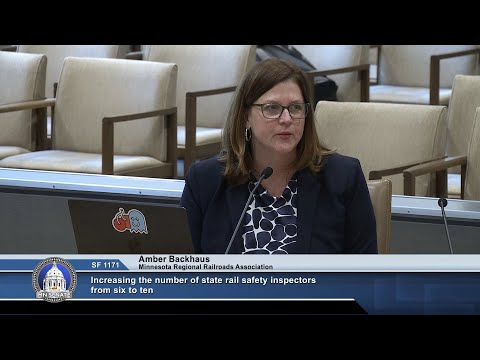
Amber Backus, representing the Minnesota Regional Railroads Association, told the committee short lines rely on the credit to access financing for track rehabilitation. She said construction and material costs that previously might have been about $500,000 per mile have risen toward $1 million per mile with inflation, and that the initial 2023 statute did not allow timely transferability of the credit to support financing. Backus said the current bill is a cleanup to restore the program's intended flexibility so small railroads can leverage capital sooner.
Ryan Petey, working with short-line railroads, testified remotely that the cleanup aligns Minnesota with incentive mechanisms used in other states and will accelerate track investments that improve safety and service. He told the committee the state's short-line needs are significant, with industry estimates of roughly $250 million in projects potentially eligible for help under both the tax-credit and the Rail Service Improvement Program.
MnDOT and the Department of Revenue told the committee the bill produces a net-zero fiscal note. MnDOT estimated about 520 hours per year of staff time to review applications and issue certificates; both agencies said the workload can be absorbed within existing staff. On a voice vote, the committee recommended Senate File 1046 be passed and referred to the Taxes Committee.
The committee recorded the motion, the voice vote and the outcome as: motion carried and referral to the committee on taxes.