Get Full Government Meeting Transcripts, Videos, & Alerts Forever!
Get email alerts on the Non Emergency Transportation topic
No spam. Unsubscribe anytime.
Committee weighs Medicaid rate increase for non-emergency medical transportation
Summary
Providers told senators rising costs and shrinking provider networks threaten access to medically necessary non-emergency trips; senators laid Senate File 2125 over for possible omnibus inclusion.
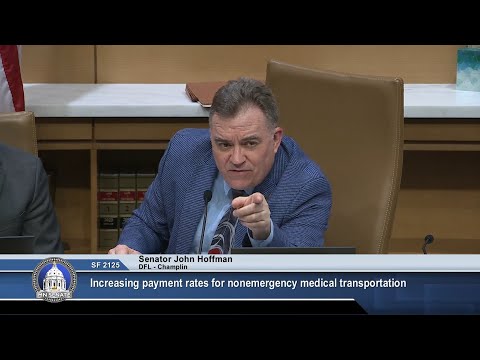
On March 10, 2025, the Minnesota Senate Human Services Committee heard testimony on Senate File 2125, which would increase Medicaid reimbursement rates for non-emergency medical transportation (NEMT) statewide.
Sponsor testimony and industry witnesses described NEMT as a Medicaid-mandated service that serves primarily elderly and disabled residents and long-term care patients. "Ninety percent of these services are provided through Medicaid," a sponsor said. Scott Isaacson, who said he has run a non-emergency medical transportation company for 16 years and represents the RAD Transportation Alliance, warned that inadequate reimbursement has caused providers to leave the market. "Considering this," Isaacson said, the bill is "critical to maintain a network of providers to serve Outstate Minnesotans." He added that rates have risen only about 10% since 2010 while vehicle and insurance costs have grown much faster.
Phil Stahlberger of MTM, a national medical-transportation manager, told the committee that Minnesota is unusual among states for setting NEMT rates in statute and that the state has lost providers: "We used to have about 60 transportation company providers in our network. We now have about 40." MTM said it provides roughly 55,000 trips a month in the counties it serves and urged a rate structure that reflects geography and vehicle mode; witnesses also suggested indexing rates to inflation.
Committee members asked whether increasing rates would attract more providers; witnesses said higher, predictable reimbursement would improve network stability and reduce reliance on ambulances for non-emergency trips. The committee laid the bill over for possible inclusion in the omnibus bill; senators also discussed an alternative governor proposal to change the delivery model for NEMT.
Outcome: Senate File 2125 was laid over for possible omnibus inclusion.