Get Full Government Meeting Transcripts, Videos, & Alerts Forever!
Get email alerts on the Healthcare Workforce topic
No spam. Unsubscribe anytime.
Committee hears bill to expand medical-education funding and loan-repayment eligibility; members ask for drafted amendments
Summary
Senate Bill 130 would broaden medical-education reimbursement and service-cancelable loan eligibility to include final‑year residents, additional institutions (FQHCs, clinics) and add data-collection changes; the sponsor presented amendments and the committee agreed to circulate drafted language and reconvene for a hearing.
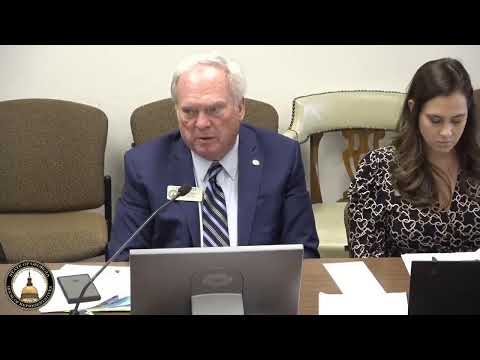
Senator Hodges brought Senate Bill 130 to the House Health Committee to expand the state's medical-education support and service-cancelable loan programs, aiming to increase the number of healthcare providers in underserved areas.
Hodges said the bill amends Title 31 to broaden the resident reimbursement program that directs the Department of Community Health to pay up to $10,000 per year for each resident participating in accredited graduate medical education programs. The measure changes the term "designated teaching hospital" to "designated institutions," allowing additional medical facilities—such as federally qualified health centers (FQHCs) and stand‑alone clinics with a CMS Medicare/Medicaid number—to receive reimbursement if they host ACGME-approved residency or fellowship positions.
The bill also adds final-year residents and fellows to the list of providers eligible for the Georgia Health Care Workforce Board's service-cancelable loan programs. Sponsor Chet Bassin (Executive Director, Georgia Board of Health Care Workforce) told the committee the program currently manages about $5 million and is competitive; allowing final‑year trainees to apply would expand the applicant pool but would not by itself appropriate new funds. Hodges said section 3 would require residency or fellowship participants be U.S. citizens or native-born.
Members questioned fiscal impact and program capacity. Representative Clark asked whether expanded eligibility would require additional appropriations; Bassin replied the bill does not request more money and the board currently preselects alternates because programs are often oversubscribed. Representative Douglas asked whether there is a fixed slot allotment; Bassin explained some sub-programs are limited to a managed number of slots (examples given: six dental slots, ten nurse-faculty slots) and the board scores applications on factors such as debt load and specialty.
The sponsor then described proposed amendments to modify O.C.G.A. 49-10-5: replace "behavioral health care providers" with "all health care licensees" in the minimum data set language and add a detailed list of licensees (physicians, pharmacists, dentists, chiropractors, optometrists, occupational and physical therapists, audiologists, psychologists, LPNs, RNs, nurse anesthetists, clinical nurse specialists, psychiatric/mental health nurses). The stated purpose is to create a statewide health-provider data system useful to planners and consumers.
Committee members requested line-numbered drafted language. Representative Douglas asked to see the written amendment before voting; the sponsor agreed. The chair said the committee would treat the item as a hearing on the proposed changes, circulate the drafted amendment and bring the bill back for consideration at the next meeting.
No final committee vote on passage was recorded in the transcript; the committee agreed to continue the discussion after the legislative counsel drafts the amendment language.