Get Full Government Meeting Transcripts, Videos, & Alerts Forever!
Get email alerts on the Public Safety Financing topic
No spam. Unsubscribe anytime.
Clear Creek County begins ballot planning discussions after public‑safety survey draft and CCFA funding proposal
Summary
Commissioners reviewed a draft public-safety financing survey and a Clear Creek Fire Authority (CCFA) “good” funding goal. Officials discussed sales tax, property tax (mill) options, measurement challenges around visitors versus residents, and next steps including more data, business outreach and an Alpine Rescue briefing.
Clear Creek County commissioners and municipal partners reviewed a draft public-safety financing survey, discussed funding options for county emergency services and the Clear Creek Fire Authority (CCFA), and set follow-up steps to gather more data and public feedback.
County staff walked the group through a public‑safety financing survey and an illustrated estimate that a 2.0 percentage-point increase in sales tax would generate roughly $5.2 million annually. The survey packet also included a summary of county budget pressures, a review of 9‑1‑1 surcharge limitations and background on the Community Crisis and Health Assistance Team (CHAT), which staff said is nearly entirely grant-funded at present.
The meeting included a focused presentation of CCFA’s “good” financial goal, the product of recent staff and CCFA board discussions. County staff said the “good” package seeks to: close CCFA’s operating deficit; fund a dedicated fire marshal position; invest $500,000 annually in capital; cover a remaining portion of a previously identified funding gap for 2024 operations; and expand a mitigation (mid) crew to year‑round operations. Staff framed that package as a baseline, distinct from larger “better” or “best” options previously discussed.
Commissioners and agency leaders extensively debated how best to measure service demand and how to demonstrate burden-sharing between residents and visitors. Denise (a sheriff’s office analyst) said her analysis showed that 57% of the sheriff’s office calls for service in 2024 were to state roadways and that 46% of those roadway calls were on I‑70; she added that patrol deputies estimate 80–85% of their time can be spent on the interstate. County staff and agency leaders noted that “calls” and “time on task” can yield very different pictures of cost and operational impact, and they emphasized the need for apples‑to‑apples data comparisons across agencies.
Options discussed for funding the CCFA goal included: a CCFA‑only sales tax (staff calculated a roughly 0.54 percentage‑point sales tax in some mixed scenarios), a pure property‑tax approach (a county‑wide district millage estimated at about 13.55 mills in an all‑property approach), or mixed models that equalize municipal/unincorporated mill rates and use sales tax for the remainder. Staff explained the distributional trade-offs: sales tax tends to fall on places that generate commercial sales (municipalities and visitors), whereas property tax affects property owners in the geographic district.
Participants raised practical and political concerns. Several municipal representatives warned that raising sales tax could draw business opposition. Others argued a mixed model — for example, setting an emergency services district (ESD) to 9 mills for parity and using a modest sales-tax increase to cover the balance — might be both fairer and easier to sell to voters. Legal counsel clarified that two separate tax types cannot be combined into a single ballot question; each funding mechanism would require its own voter measure.
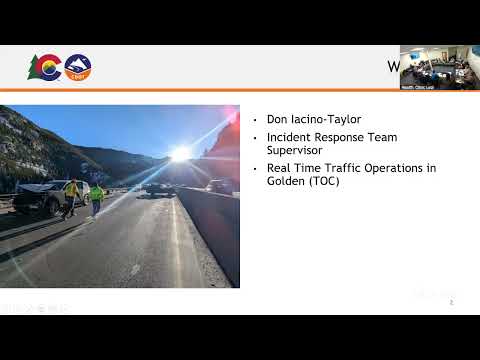
Staff outlined timing: the county survey was expected to hit mailboxes in late April with results in May, giving local officials a window to develop ballot language for a potential late‑summer ballot. Commissioners asked staff to engage the business community, tighten FAQ language, and coordinate with the Traffic Operations Center (TOC) and other agencies to pull consistent metrics for resident vs. visitor service burden.
Several operational and funding specifics emerged in the discussion: the 9‑1‑1 surcharge and opioid settlement funds were characterized as limited or grant-based and therefore not reliable for sustaining services; CHAT is heavily grant-funded; opioid settlement receipts were said to be front‑loaded and finite; and Alpine Rescue missions — primarily visitor-driven in past years — impose volunteer and agency time costs that county leaders said should be included in broader cost accounting. Commissioners asked staff to invite Alpine Rescue to the next meeting for a 15–20 minute Q&A.
Why it matters: county leaders face a fiscal choice about how to stabilize and expand emergency services for residents while recognizing heavy visitor demand on county infrastructure, especially I‑70. The group agreed on more data collection, business engagement and community outreach before deciding a funding path.
Ending: The board set follow-up tasks — county staff to finalize the FAQ and survey materials, municipal partners to consider the funding options, the three primary agencies to prepare short data presentations on how they measure visitor vs. resident demand, and staff to invite Alpine Rescue to brief the board at a future meeting.