Get Full Government Meeting Transcripts, Videos, & Alerts Forever!
Get email alerts on the Residential Code Amendments topic
No spam. Unsubscribe anytime.
Committee hears public safety and design debate over proposed 'consolidated dwelling' IRC amendments to expand small multifamily options
Summary
City staff and architects presented a draft to allow "consolidated dwelling units" (stacked/attached small multi-unit buildings) under the International Residential Code; fire-safety groups and a fire survivor urged stronger sprinkler and egress requirements.
City of Dallas staff and local architects briefed a committee on draft amendments to the International Residential Code that would create a new "consolidated dwelling" building type allowing up to eight dwelling units in some residential structures.
The proposal is intended to expand housing options by allowing developers to build denser small-multiunit housing under the IRC rather than the more stringent IBC. Staff and AIA representatives said the draft aims to preserve familiar IRC procedures for design and permitting while adding requirements for fire-resistance construction, sound isolation and accessibility.
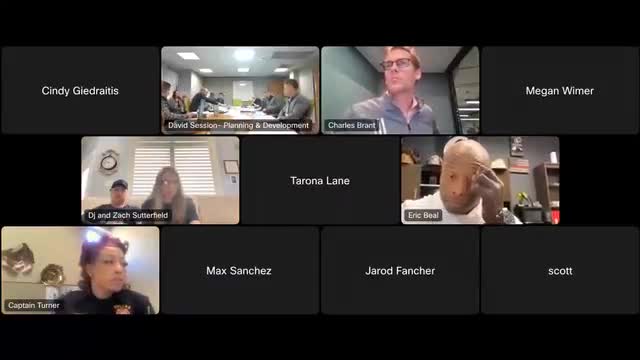
Cindy Godreides, regional manager for the National Fire Sprinkler Association, told the committee she and NFSA colleagues reviewed proposals used by other cities and opposed drafts that would permit multiple units without automatic sprinkler protection. "One of the most concerning elements of the proposed code is that there would be multiple units allowed in buildings under 7,500 square feet without fire protection," Godreides said. She and other speakers argued that multiunit buildings without sprinkler systems increase risks for occupants and firefighters. Godreides said the ordinance package she provided to staff shows higher fatality and injury rates in multiunit housing without sprinkler systems and urged waiting on local changes until pending state legislation is clearer.
Two public speakers described life-or-death consequences from unsprinklered housing. Zachary Sutterfield, who survived a 2018 apartment fire in San Marcos, said he was "very unaware of how unsafe the building was, with no sprinkler system and no, centralized alarm systems." He said, "Sprinkler systems save lives." His mother recounted the arson fire that critically injured her son and urged the committee to prioritize occupant safety when considering code changes.
City staff, represented in the meeting by Camille Miskwick, senior architect with the city, walked the committee through draft language. The draft would: define "consolidated dwelling" (a building containing up to eight independently occupied dwelling units); limit consolidated dwellings to three stories and 40 feet above grade; cap 4 dwelling units per floor when the story is above or below the level of exit discharge; require fire-resistance-rated separations between units (townhome-style party walls applied vertically from floor to roof deck); and require sound transmission controls between units and corridors. The draft also proposes that consolidated buildings be exempt from required sprinklers only if the building is 7,500 square feet or less and no vehicle parking is provided above or beneath the dwelling units; both larger buildings and those with tuck-under parking would require sprinklers.
Committee members and staff debated whether the draft should permit up to eight units (as requested by some council sponsors) or whether the city should phase the change, first allowing four-unit buildings and later considering higher counts. Chief Bill (fire department representative present in the discussion) said the fire department supports four-unit allowances without reservation but raised concerns about the lack of suppression systems and single stair egress when proposals sought to expand to higher counts without sprinklers. Staff acknowledged differing views and said they would take comments back to the drafting group.
The draft also addresses accessibility under the Fair Housing Act: consolidated-dwelling developments with four or more units must include accessible units and features, which can require elevators or at-grade accessible units when living areas are above ground-floor parking. Cindy Godreides and staff noted that pending state legislation (she cited SB 15 by name) may change lot-size and density rules and urged cities to wait for state action before finalizing local ordinance language.
Architects and AIA task-force members said the change is motivated largely by the desire to reduce cost barriers for small-multifamily buildings, allowing small apartment formats that are currently cost-prohibitive under IBC rules. They argued the draft balances life-safety measures with design flexibility; fire-safety speakers urged stricter suppression and egress requirements as a condition of expanding unit counts.
No final vote was taken. Staff said a combined draft that incorporates committee and AIA task-force comments has been circulated to members and that staff will produce a formal ordinance for further committee review. The committee discussed timing for transmittal to council; staff said a target transmittal would be by the end of March for economic-committee review, followed by council consideration. The committee requested additional cost, accessibility and sprinkler-system details before making a formal recommendation.