Get Full Government Meeting Transcripts, Videos, & Alerts Forever!
Get email alerts on the Environmental Permitting topic
No spam. Unsubscribe anytime.
Judge says residents should file comments with TCEQ; county will request public hearings on wastewater and biosolids permits
Summary
The County Judge urged residents to file public comments with the Texas Commission on Environmental Quality (TCEQ) on permit applications and said the county will request hearings where there is public interest.
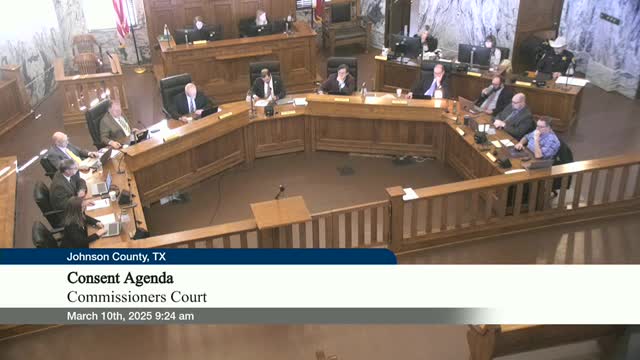
During the consent-agenda review, the County Judge called attention to multiple Texas Commission on Environmental Quality permit notices on the agenda and said county staff have filed comments and requested public hearings where citizens indicated concern.
The judge told residents that once they register an account on the TCEQ website they can enter a permit number and file a comment online; he said that if TCEQ finds “sufficient public interest,” it will hold a public hearing in the county. The judge emphasized that permitting decisions (for example, wastewater permits and other authorizations) are state actions, and that the county lacks authority to approve or deny TCEQ permits; the county’s recourse is to request a public hearing and submit comments.
The judge singled out a wastewater permit application for Joshua Farms Municipal Management District and other TCEQ notices affecting areas around Godley and Burleson, and encouraged citizens to contact their commissioners and the judge’s office or file comments directly with TCEQ.
Why it matters: county officials said notifying TCEQ and requesting hearings brings state regulators to local communities, provides residents an opportunity to speak on permit applications and creates a public record for regulators to consider. The judge said he prefers regulators to “drive from Austin to Johnson County” when permit interest is high so residents can be heard in person.
No formal vote was required; the remarks were part of the court’s consent-agenda discussion and the consent agenda (CA1–CA32) carried unanimously later in the meeting.