Get Full Government Meeting Transcripts, Videos, & Alerts Forever!
Get email alerts on the Environment Pfas Biosolids topic
No spam. Unsubscribe anytime.
Johnson County commissioner says local PFAS testing helped spur bans and moratoria in several states
Summary
A Johnson County commissioner told the court that the county's PFAS testing and resolution have influenced other states to restrict land application of biosolids and prompted related legislation.
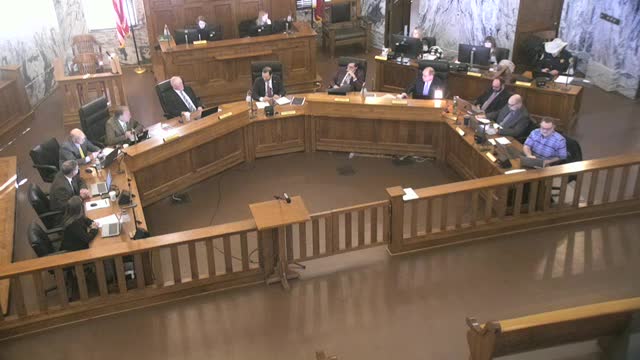
A Johnson County commissioner told Commissioners Court that local testing for PFAS chemicals in biosolids has influenced other states to adopt moratoria, bans or testing requirements for land application of biosolids.
The commissioner said Johnson County’s February 16, 2024 presentation by Detective Ames and the county’s subsequent resolution and media attention “weighed heavily” in decisions by other states. The commissioner listed Connecticut (ban effective Oct. 1, 2024), New York (moratorium and ban in January 2025), Minnesota (September 2025 action noted), and Michigan (2024 testing requirements) as examples, and said additional states and counties are considering restrictions or legislation.
Why it matters: county officials framed the local action as an early, high-profile effort that prompted follow-up action elsewhere and that mirrors bills proposed in the Texas Legislature. The commissioner referenced proposed Texas measures — described in the meeting as “house bill 16 74 and senate bill 8 86” — saying those bills, like the county’s request, would require testing to determine whether biosolids exceed PFOA/PFOS thresholds rather than imposing an outright, unconditional statewide ban.
Court discussion and context: the speaker emphasized that the county’s resolution asked state officials to require testing of biosolids for PFAS and to consider restrictions if thresholds are exceeded, and pushed back on social media claims that the county had sought a total ban. The commissioner said the testing requires laboratories with capabilities beyond local capacity and that implementation will take time even if state legislation passes.
The commissioner named multiple Texas counties that have adopted resolutions or sought testing, including Ellis, Henderson, Kaufman, Somervell, Wise, Franklin, Hood and Hunt counties, and said others have contacted his office. The court did not take formal action on this report during the meeting; it was an informational update to the body.
The commissioner also noted national organizations and federal outreach — referencing a NACo (National Association of Counties) connection and meetings in Washington — and said that the county’s work had been discussed with state and federal elected officials.
Remaining questions and next steps: court members asked about disposal methods where land application is restricted; the commissioner said options used elsewhere include incineration or landfilling when biosolids test above certain PFAS limits. He also noted continued engagement with the Legislature and encouraged citizens and local officials to contact state lawmakers about proposed bills.