Get Full Government Meeting Transcripts, Videos, & Alerts Forever!
Get email alerts on the Women Peace Security topic
No spam. Unsubscribe anytime.
Security Council signatories condemn Taliban restrictions on Afghan women, urge UN presence
Summary
Representatives of Security Council member states issued a joint statement at the United Nations condemning recent Taliban measures that curtail the rights of women and girls in Afghanistan and called for renewed UN engagement, including the full renewal of UNAMA’s mandate.
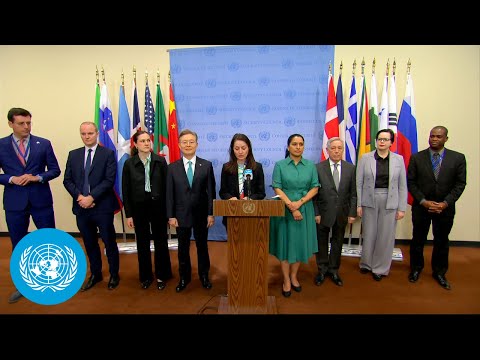
A United Nations Security Council representative read a joint statement at UN headquarters condemning the Taliban’s “continued and systematic gender discrimination” and urging the Taliban to reverse measures that have barred women and girls from public life, the statement said.
The statement, delivered by representatives of Denmark, France, Greece, Guyana, Panama, the Republic of Korea, Sierra Leone, Slovenia and the United Kingdom, said the measures — including more than 80 Taliban decrees — aim to institutionalize gender-based discrimination and urged accountability for gender-based crimes.
The statement noted that this year marks the 30th anniversary of the Beijing Declaration and Platform for Action and the 25th anniversary of the women, peace and security agenda established by UN Security Council resolution 1325. "We condemn, in the strongest terms, these policies, and we call on the Taliban to immediately cease and reverse their ongoing systematic violations of human rights," the representative said.
The speaker listed recent Taliban actions cited in the statement: an August 2024 law on the propagation of virtue and prevention of vice; a December 2024 suspension of women’s and girls’ access to education in both private and public medical institutions; a ban on women working for the United Nations and for nongovernmental organizations in Afghanistan; and restrictions on women’s freedom of movement and freedom of expression. The statement said these measures amount to "gender-based discrimination, persecution, and oppression."
The representative said member states welcome "steps to hold the Taliban accountable," including arrest warrants against two senior Taliban leaders and a commitment to pursue accountability for gender-based crimes, including gender persecution. The statement called on the Taliban to respect Afghanistan’s international obligations, specifically citing the Convention on the Elimination of All Forms of Discrimination Against Women (CEDAW).
The joint statement reaffirmed support for a continuous UN presence in Afghanistan, including the United Nations Assistance Mission in Afghanistan (UNAMA), and urged all UN agencies, funds and programs to work coherently to uphold and advocate for the rights of women and girls. It also endorsed diplomatic processes mentioned in the statement, including the UN-led Doha process and newly established working groups such as the Central Asian Women Leaders Caucus, and called for the full renewal of UNAMA’s mandate.
The statement concluded without announcing a formal Security Council vote; it was presented as a joint statement by the signatory member-state representatives and not as a Council resolution.