Get Full Government Meeting Transcripts, Videos, & Alerts Forever!
Get email alerts on the Retiree Account Access topic
No spam. Unsubscribe anytime.
TRS explains who may receive retirees' account information and how to authorize others
Summary
A Teachers' Retirement System representative outlined how retirees can authorize others to receive account details, describing three options—a confidential information release, power of attorney and guardianship—and explaining limits on what third parties may do.
A Teachers' Retirement System (TRS) representative said the system provides specific account information only to the retiree and described three formal ways retirees can authorize others to obtain information about their TRS account: a confidential information release authorization, a power of attorney (POA) for property and financial affairs, and court-appointed guardianship.
The TRS representative said that “TRS has a policy of providing specific information about your TRS account only to you.” The presentation, recorded for TRS’s YouTube channel, explained what each authorization allows and how TRS processes the required documents.
Why it matters: Retirees frequently need family members, attorneys or financial advisers to obtain account details such as benefit amounts, beneficiary designations and contact information. TRS’s procedures determine whether a third party may only receive information or may also make changes on a retiree’s behalf.
Under TRS policy, a completed Confidential Information Release Authorization (a form that requires the retiree’s handwritten signature) allows TRS to release limited account information to a designated person but does not permit that person to make changes to the retiree’s record. The retiree specifies on the form what information may be released and may limit the authorization to items relevant to a particular matter (for example, information related to a divorce) or set a specific expiration date for temporary authorizations.
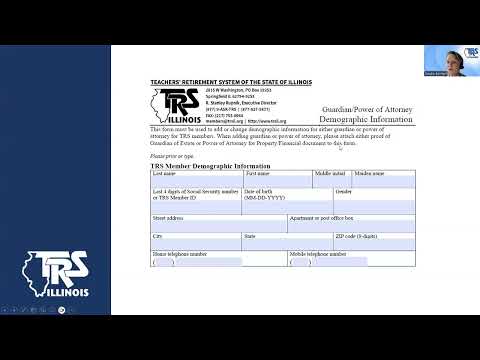
A power of attorney for property and financial affairs gives the named agent the ability to make changes to a TRS account in addition to receiving information. TRS requires the complete POA document plus a completed POA/guardianship demographic form to register the POA; the agency will keep a separate tab in the member’s online account showing the POA’s contact details. TRS said having a POA does not prevent the retiree from making changes; both the retiree and the POA can sign requests for changes unless a physician has determined the retiree is incapacitated.
The most restrictive option is a court-appointed guardian. TRS said a guardian acts on the retiree’s behalf if a person is legally determined unable to make decisions. To remove a guardian TRS requires a court order; a written request from the retiree is not sufficient. TRS requires submission of the court document and the same demographic form used for POAs.
TRS advised retirees to upload signed forms to their online TRS account or mail or fax the documents; the representative warned that email may not be a secure way to transmit private information. TRS also noted related topics available on its YouTube channel, including changing tax withholding (Form W-4P), Form 1099-R and health insurance information. The representative provided TRS contact options as "730 to 430" and said staff can provide a toll-free number and a fax number as needed.
The representative emphasized that information specific to a retiree—such as pension amounts, raises, beneficiary listings and addresses—will be provided only to the retiree unless an authorization or legal document is on file allowing otherwise. The presentation closed with instructions to upload or mail forms to TRS and a reminder that forms require handwritten signatures.