Get Full Government Meeting Transcripts, Videos, & Alerts Forever!
Get email alerts on the Nursing Certification School Medications topic
No spam. Unsubscribe anytime.
Committee advances bill to tighten nursing credential review and allow school storage and administration of glucagon
Summary
House Bill 688 would give the Kentucky Board of Nursing discretion to review out-of-state nursing credentials and allow schools to store and administer glucagon and other diabetes medications; the committee approved the bill 10–1.
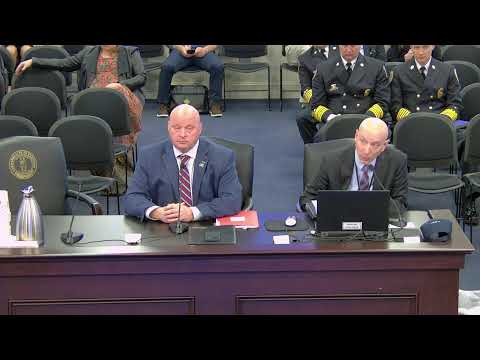
The Senate Standing Committee on Health Services voted 10–1 to advance House Bill 688, a two-part measure that would give the Kentucky Board of Nursing greater authority to review out-of-state nursing credentials and would allow schools to store glucagon and permit trained school personnel to administer certain diabetes medications.
Representative Steve Bratcher and Jeff Prather, general counsel for the Kentucky Board of Nursing, told the committee that the bill would change the board’s current obligation from "shall" to "may" when granting certification to nurses licensed in other states, allowing the board to verify credentials and curricula before granting licensure in Kentucky. “Presently, we have about 60 people on hold right now that are trying to get certified in Kentucky because of our law,” Prather said. The change is intended to let the board investigate applicants from programs it considers potentially fraudulent or substandard.
Prather and other witnesses referred to national concerns about fraudulent or low-quality nursing programs and an FBI operation sometimes called Operation Nightingale; they said some applicants receive credentials without completing full curricula and later seek Kentucky licensure. Committee members expressed concern about maintaining nursing standards while addressing workforce shortages. Supporters noted existing pathways to speed licensure for qualified applicants — for example, the multistate nurse licensure compact and separate proposed measures for military-trained medical personnel — and said the board’s review would not be used to arbitrarily bar qualified candidates.
The bill’s second part concerns schools and diabetes care. Sponsors said the bill would allow glucagon and similar medications to be stored at school nurse stations rather than carried by students, permit school nurses to train teachers and other staff to administer approved medications, and provide civil immunity for persons who, in good faith after training, administer those medications. “If a person in good faith and has been trained in the school system to give this medication, gives the medication, then they're exempted from civil, they have civil immunity,” a committee witness summarized for senators.
The committee approved the bill by roll call, 10–1; one senator recorded a “no” vote and explained the vote reflected a preference to retain the prior “shall” language to reduce licensing bureaucracy amid a nursing shortage. The bill advances for further consideration; committee discussion did not specify exact implementation timelines for credential reviews or the administrative rules that will govern school medication storage and training.