Get Full Government Meeting Transcripts, Videos, & Alerts Forever!
Get email alerts on the Medicaid Oversight Board topic
No spam. Unsubscribe anytime.
Kentucky panel creates Medicaid oversight and advisory board to coordinate policy study
Summary
The Senate Health Services Committee approved House Bill 9 to establish a Medicaid oversight and advisory board intended to bring legislative, executive and stakeholder perspectives together to study Medicaid policy before formal adoption.
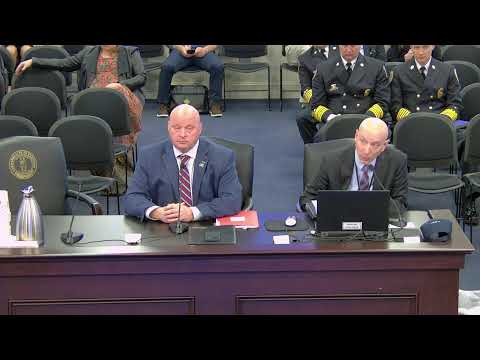
The Senate Standing Committee on Health Services on Oct. 27 voted to pass House Bill 9, which creates a Medicaid oversight and advisory board intended to study Medicaid issues and provide coordinated recommendations to state policymakers.
Sponsors and supporters told the committee the board is modeled on the public pension oversight board and is intended to give lawmakers, the executive branch and stakeholders time and structure to analyze consequences and unintended effects before new Medicaid policy is adopted. “This board looks to accomplish the same thing on another topic that affects all of us across Kentucky, which is Medicaid,” Representative Adam Bowling said during committee discussion.
The bill’s sponsors said Medicaid is one of the state’s largest budget items and affects providers and health systems statewide. “It currently nearly 1 out of 3 Kentuckians are on Medicaid,” Bowling said, adding the program is “our second largest general fund dollar item, and it’s our largest budget unit as a whole when you consider federal funds as well.” The bill’s text, as explained to the committee, focuses on creating a structure for sustained study rather than imposing specific policy changes.
Committee members asked about board composition and representation for on-the-ground providers. Sponsors said the final design reduces the size from an earlier draft to improve effectiveness and allows turnover through two-year terms so different perspectives cycle on. Committee discussion identified the board’s composition as including 10 voting members of the General Assembly, two nonvoting ex officio members (chairs of appropriations/revenue committees) and 11 nonlegislative members, as explained in committee remarks.
The committee approved the bill with a substitute and a title amendment. The vote was unanimous.
The measure now proceeds through the legislative process as amended; sponsors said they expect the board could be meeting by the fall following enactment and that membership and precise stakeholder representation can be adjusted once the body is established.