Get Full Government Meeting Transcripts, Videos, & Alerts Forever!
Get email alerts on the Zoning Public Engagement topic
No spam. Unsubscribe anytime.
Hocking Zoning Commission summarizes public engagement; short-term rentals, infrastructure and enforcement top concerns
Summary
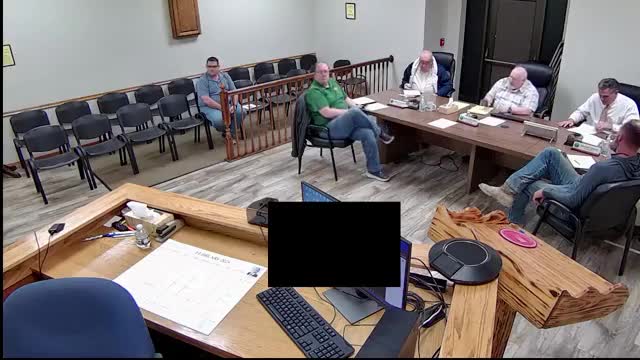
The Hocking Zoning Commission on Feb. 27 reviewed months of public engagement and survey results, announced a March 25 community meeting at the Hocking Hills Retreat Center and summarized recurring concerns—chiefly short-term rentals, infrastructure impacts and enforcement gaps—that will shape the commission's recommendations.
The Hocking Zoning Commission on Feb. 27 reviewed months of public engagement and survey results, announced a March 25 community meeting at the Hocking Hills Retreat Center and summarized recurring concerns—chiefly short-term rentals, infrastructure impacts and enforcement gaps—that will shape the commission's recommendations.
“This is a summary of all the public engagements that we've had thus far,” Audie (staff member) told the commission as he presented slides summarizing stakeholder meetings, a 21-question survey and outreach at the county fair.
Commissioners and staff said the material matters because possible recommendations could include new local regulations, registration and tax-classification changes, and coordination with emergency services and county offices to address safety and funding gaps.
Survey and stakeholder results
The commission reported roughly 400 survey responses collected before the end of the prior year. The questionnaire contained 21 questions and, the commission said, about 90% of respondents were Hocking County residents; respondents were 55.83% female and roughly three-quarters were older than 40. Commissioners summarized the largest areas of concern—enforcement and governance, infrastructure impacts, and housing affordability—each receiving roughly similar shares of concern in the commission's charts (about 20–22% each).
On short-term rentals specifically, the commission said 68% of survey respondents favored some form of regulation intended to slow the growth of short-term rentals. Preferences for land-use tools varied: 25% favored a flexible zoning approach, 24% moderate zoning, 16% opposed zoning and about 15% preferred minimal regulation. Audie and other presenters cautioned that many respondents conflate “zoning” with a broader menu of regulatory tools (impact fees, registration, permitting and performance-based rules).
Stakeholder outreach included five to seven targeted meetings with groups the presenters listed as emergency services and first responders, local business owners, realtors and brokers, developers and design professionals, agricultural representatives and township trustees, plus a meeting of short-term rental owners held in January. Presenters said attendance at those sessions ranged from small to well attended depending on the group.
Concerns raised by first responders included: difficulty locating units when multiple cabins are on a single parcel or share a single mailing address; driveway access in winter months; and the potential for multiple calls to the same remote development that slow response times. Commission members said they will ask 911, the county Emergency Management Agency and local fire/rescue departments for run data to quantify impacts.
Policy options and next steps
Commission members discussed potential policy tools raised during outreach: registration and a county-level short-term rental registry, special-event permits, clearer address identification or unit numbering, impact fees to cover infrastructure and emergency-service costs, and stronger enforcement or nuisance/property-maintenance codes. The county auditor, the commission said, is examining property-classification and tax-registration options to differentiate owner-occupied residences from commercial short-term rental operations.
Presenters said a special-event permit concept is under discussion with first responders and the EMA and that details (including whether fees would apply) remain to be finalized. The commission emphasized that enforcement capacity will be central to any recommendations.
Community meetings and outreach
The commission announced a series of township meetings to gather more detailed input before drafting recommendations. The first community meeting is scheduled for March 25, from 6:30 to 8 p.m., at the Hocking Hills Retreat Center (formerly the Nazarene convention center) on Chieftain Drive. Additional April meetings were named during the session: at the Lower Veil Church of God (on Route 56 near South Bloomingdale) and the Guy Gibsonville Community Center; organizers said some dates remain to be finalized and will be widely publicized via social media, local newspapers and other channels.
Responses from short-term rental owners were mixed: presenters said some owners accept that growth can strain infrastructure and emergency services and asked for better intra-industry communication, while a few attendees questioned negative comparisons to other tourist areas. A participant the presenters described as a short-term rental owner asked, “What's wrong with Gatlinburg? We like Gatlinburg,” illustrating the range of local views on tourism and growth.
Process notes, data and coordination
Presenters said they will follow up with county departments (auditor, treasurer, EMA, sheriff/911 and fire districts) to gather quantitative data such as run counts and tax-classification options. They also plan to bring draft regulatory options back to the township meetings and to discuss enforcement mechanisms and likely fee or revenue models.
Formal meeting actions
At the start of the meeting staff offered the January minutes for approval and asked for a motion; the transcript records a call for a second but does not capture a roll-call vote. At the end of the meeting the commission moved to adjourn; a second was recorded and the chair closed the meeting.
What’s next
Commissioners said the immediate next steps are the March 25 township meeting and additional April meetings to collect more targeted input. Staff indicated they will compile follow-up data from first responders and county offices to inform a set of recommended tools—ranging from registration and targeted permits to possible zoning or performance-based rules—for the commission to review before drafting ordinance-level language.
The commission encouraged broad participation in the township meetings and said they will publish meeting materials and the survey PDF for public review.