Get Full Government Meeting Transcripts, Videos, & Alerts Forever!
Get email alerts on the Parks Recreation Pool topic
No spam. Unsubscribe anytime.
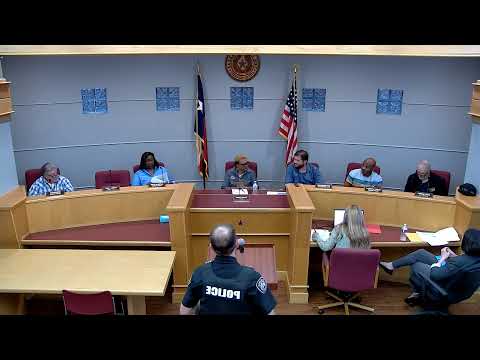
Crockett council workshop reviews options to replace long-closed municipal pool; staff to pursue grants and local funding
Summary
City staff reviewed the history and three funding/design options for rebuilding Crockett's municipal pool, including using existing funds for a smaller pool, reapplying for a Texas Parks and Wildlife large-project grant, and seeking partnerships or borrowing. Council directed staff to pursue options 1 and 3 and return with cost scenarios.
City staff presented a workshop on replacing Crockett’s long-closed municipal pool, outlining the site history, prior grants and repairs, and three options for moving forward. Staff recommended simultaneously pursuing a smaller, locally funded pool option and reapplying for a large Texas Parks and Wildlife grant while seeking additional partners and financing.
The presentation traced the site from partial repairs in 2012–2015 through demolition of the unsafe concrete pool and construction of a splash pad funded in 2017 by a $150,000 Parks & Wildlife grant (a 50% match of $75,000 city funds). Staff said earlier engineering estimates (circa 2019) put a full pool replacement at about $775,000 (including roughly $25,000 in engineering/design bidding costs), but bids returned after 2020’s supply and labor disruptions were substantially higher — with some bids at $1.5 million to $1.8 million. A 2022 local-bid approach produced a low swimming-pool bid near $1.1 million, still above the city’s available funds.
Staff said the city applied for the Texas Parks and Wildlife ‘‘large community projects’’ grant at the $1.5 million bracket and that Crockett’s application ranked about 30th of 68 applicants this round; 22 awards were made and Crockett did not receive funding this cycle. "They looked at our application. They feel it's a really nice a good application. They did offer a workshop in May," a city staff member said about grant-application technical assistance.
Council members and the mayor discussed three options brought forward by staff: 1) build a smaller pool using the city’s existing funds and limit ancillary features (example design shown to cost roughly $550,000 for the pool shell but excluding site trimmings such as fencing, lighting and gate control); 2) reapply for the TPWD large-project grant and use the city’s $750,000 as the local match if awarded; and 3) pursue partnerships or borrowing (tax notes, bonds, or partner organizations such as Boys & Girls Club, YMCA or the school district) to cover the gap for a full-size pool. The mayor summarized the council’s direction: "To move forward, 1 and 3 is our only option." Another council member added, "we don't need another splash pad, we need a pool, a real pool."
Staff cautioned that committing or spending local funds before a grant award can make the city ineligible for reimbursement under typical grant rules; therefore the recommendation is to pursue the grant application while developing financing scenarios that would not lock up funds and would preserve eligibility. Staff also outlined operational considerations discussed with other cities: staffing (lifeguards), ongoing maintenance (estimated historical operating costs around $40,000 per season as referenced in the workshop), concessions as a revenue source, and possible vendor or partner arrangements to run the facility (examples given: Boys & Girls Club running pools under contract in neighboring cities).
Council directed staff to return with detailed cost and financing scenarios, including bond/tax-note estimates and short-term cash-management options for the existing $750,000 (staff offered to present CD and short-term deposit options), refined construction cost estimates for a reduced-size accessible pool (zero-grade/beach entry and accessible benches were prioritized), and a timeline for reapplying to TPWD and using the forthcoming TPWD workshop to strengthen the application. Staff said reapplication would likely yield a decision by late calendar year (staff estimated 10–12 months for the next award cycle). The presentation and council discussion emphasized safety, accessibility (roll-in/beach entries and bench seating), and making the pool large enough to be functional for lane swimming and lifeguard training.
Council did not take a formal vote to authorize construction at the workshop; instead staff were directed to pursue the two-track approach (develop a locally funded smaller-pool option and simultaneously reapply/seek partners for a larger grant-funded project) and to return with specific financing and design recommendations.
The workshop concluded with staff confirming they would present concrete dollar scenarios for council review at a future meeting.