
Education Cannot Wait urges donors to renew Afghanistan program as film about Afghan girls’ robotics team premieres
Get AI-powered insights, summaries, and transcripts
Subscribe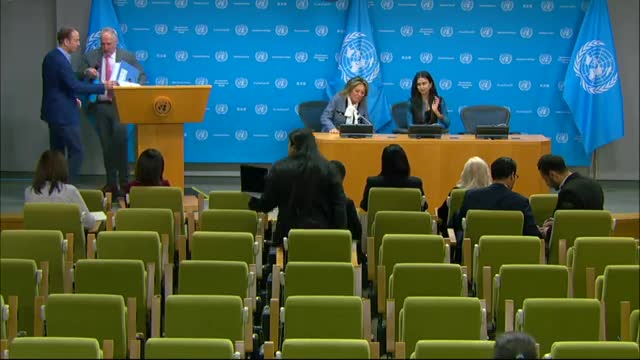
Summary
At a U.N. briefing ahead of International Women’s Day, Education Cannot Wait Executive Director Yasmin Sharif and film co-producer Elaha Mahboob highlighted a new movie about Afghanistan’s girls robotics team and urged renewed funding for a $30 million multi‑year program that supports girls’ education in Afghanistan through 2026.
Education Cannot Wait Executive Director Yasmin Sharif told a United Nations briefing March 7 that 1.5 million Afghan girls are barred from secondary school by a ban and appealed to donors to renew funding for the agency’s Afghanistan program.
“Without education this film would never have existed,” said Kent Page, chief of advocacy for Education Cannot Wait, introducing the briefing and the film Rule Breakers, which opens in cinemas. The film tells the story of the Afghan girls robotics team and premiered alongside the funding appeal.
Why it matters: Education Cannot Wait (ECW), the U.N.-hosted global fund for education in emergencies, said it has invested $30,000,000 in a multi‑year, community‑level program in Afghanistan, and that 65% of beneficiaries in that program are girls and adolescent girls. Yasmin Sharif said the program has reached “over a hundred thousand” people, trained about 3,500 teachers in mental‑health and psychosocial support and social‑emotional learning, and is scheduled to close in 2026 unless donors provide further financing.
Sharif, identified as the executive director of Education Cannot Wait, framed the funding shortfall as both a humanitarian and political risk and referenced the Islamabad Declaration, a January 2025 international conference outcome she said reaffirmed that no interpretation of Islam bars girls from education beyond primary levels. “We today have 1 and a half million Afghan girls who cannot attend to secondary school because of a ban,” Sharif said during the briefing.
Elaha Mahboob, credited in the briefing as the co‑producer and writer of Rule Breakers, said the film aims to show a fuller picture of Afghan women’s lives rather than only hardship. “Rule Breaker is not just a movie. It’s actually as a story of resilience, courage, and power of education,” Mahboob said, adding that the film follows young women “who refused to accept the limitation was placed on them.”
On the status of the robotics team, speakers said many team members are now outside Afghanistan and continue their studies abroad. The briefing said the team’s captain, Somaya Farooqi, is studying mechanical engineering in California and remains in contact with organizers.
Reporters asked whether there are divisions within Taliban leadership over girls’ education. Sharif said there are differences inside the movement and that some local commanders or individuals have “turned a blind eye” to allow girls’ education in certain areas, but she stressed that the nationwide edicts constitute a breach of international human‑rights obligations. She invoked the UN Charter and UN human‑rights instruments, saying the ban is inconsistent with those commitments.
ECW officials appealed to public and private donors to “step up” to keep the Afghanistan program running beyond 2026. Sharif said the current $30 million commitment is fully funded for the program’s present term but warned that without additional resources the program would close when the current funding cycle ends. She also cited a global figure for children out of school in crisis contexts, saying about 234 million children are currently affected by conflict, displacement or climate disasters.
The briefing combined a public awareness push around an international‑release film with an operational appeal for continued donor funding. ECW noted it is hosted by UNICEF and that its financing flows to implementing organizations on the ground rather than to crisis‑affected governments. Organizers closed by encouraging attendees and the public to see Rule Breakers and to support ECW’s work on girls’ education in Afghanistan and other crisis settings.
Ending: Organizers said the film’s release and the timing around International Women’s Day were intended to raise attention to the ban on Afghan girls’ secondary education and to prompt renewed contributions; no new donor commitments were announced at the briefing.