Get Full Government Meeting Transcripts, Videos, & Alerts Forever!
Get email alerts on the Consumer Protection Affinity Fraud topic
No spam. Unsubscribe anytime.
Utah securities official warns residents about affinity fraud, urges checks of licensing and documentation
Summary
Francois Grayson of the Utah Division of Securities described affinity fraud as investment scams that exploit trust within communities and urged Utahns—especially seniors—to verify licenses and offering documents and to use resources at securities.utah.gov and scams.utah.gov.
Francois Grayson, assistant director of the Utah Division of Securities, urged Utah residents to watch for "affinity fraud" during an interview marking National Consumer Protection Week, saying the scam often uses community trust to persuade people to invest in fake or poor-quality offerings.
Affinity fraud, Grayson said, occurs when "your family member or a friend or a member of the community uses trust to try to get you to buy either a fake or a bad investment." He recommended that anyone considering an investment check whether the person selling it is licensed, look for offering documentation rather than relying on verbal commitments, and resist high-pressure sales tactics that prevent time for research.
Grayson singled out seniors as frequent targets because they often hold retirement savings. "Seniors usually have a nest egg of retirement funds that scammers like to go after," he said, while noting that anyone can fall victim to these schemes.
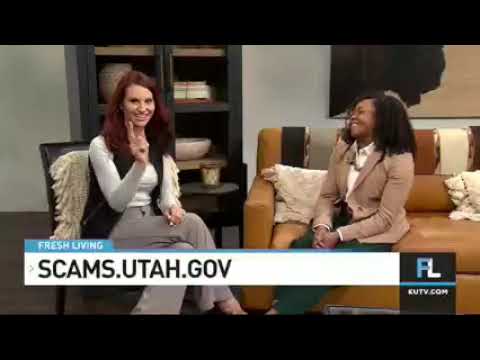
The Division of Securities provides online tools to verify licenses at securities.utah.gov and maintains consumer resources and complaint forms at scams.utah.gov. Grayson said the division can add investigative enhancements in cases involving seniors and described outreach efforts that include a division roundtable and a senior-focused outreach role he referred to as a "standing sentinel for seniors," named Queen Trustworth during the interview.
Asked for practical advice, Grayson said: "Always talk to a trusted contact about any investment offering that seems too good to be true. The point is not to ask permission to use your own funding. The point is to have an extra set of eyes to make sure it's a legitimate offering and that, that, you're able to protect yourself in the end."
Grayson also noted Vermin resources for reporting suspected scams and that the division is part of the state Department of Commerce network of agencies working on enforcement and investor education. For more information and to file complaints, he directed listeners to securities.utah.gov and scams.utah.gov.
The interview was part of National Consumer Protection Week programming and focused on helping Utah residents recognize red flags, access verification tools, and seek a second opinion before investing.