Get Full Government Meeting Transcripts, Videos, & Alerts Forever!
Ohio committee hears broad support for bill to guarantee childcare for foster and kinship caregivers
Summary
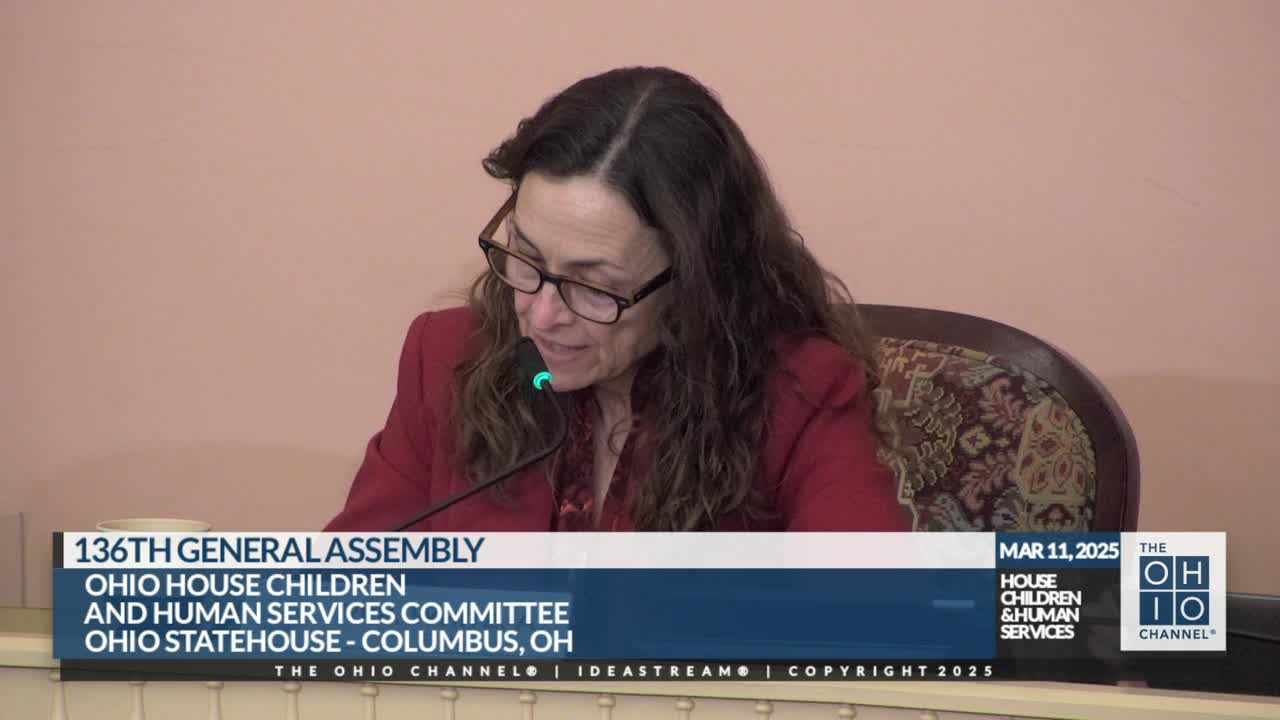
House Children and Human Services Committee Chair Andrea White convened a second hearing on House Bill 7 on Oct. 27, 2025, where foster parents, county child-welfare officials and childcare providers testified that guaranteeing publicly funded childcare for foster and kinship caregivers regardless of the caregiver’s income or employment status would increase local placements and reduce costlier out-of-county congregate placements.
House Children and Human Services Committee Chair Andrea White convened a second hearing on House Bill 7 on Oct. 27, 2025, where foster parents, county child-welfare officials and childcare providers testified that guaranteeing publicly funded childcare for foster and kinship caregivers regardless of the caregiver’s income or employment status would increase local placements and reduce costlier out-of-county congregate placements.
Supporters said the proposal would remove a practical barrier that prevents many families from accepting infants, sibling groups and other young children into licensed homes. Cassandra Holtzman, Director of Summit County Children’s Services, told the committee Summit County currently has 846 children in custody and that 50% of children placed from the county are sent outside the county because there are too few foster or kinship homes nearby. “Providing resources to cover the cost of childcare would help with recruitment and retention of foster homes,” Holtzman said.
The bill would change eligibility for Ohio’s publicly funded child care so that children placed with foster or kinship caregivers can receive care without the caregiver meeting current income or work/training requirements. Mary Wachtel, director of public policy at the Public Children’s Services Association of Ohio (PCSAO), supported the concept but warned the committee that expanding eligibility without a funding source may be unsustainable: “We do recognize that growth in the publicly funded child care program is likely to be unsustainable in a couple years,” she said, and urged the committee to consider targeted guardrails and alternative mechanisms.
Why it matters: county officials and providers…
Already have an account? Log in
Subscribe to keep reading
Unlock the rest of this article — and every article on Citizen Portal.
- Unlimited articles
- AI-powered breakdowns of topics, speakers, decisions, and budgets
- Instant alerts when your location has a new meeting
- Follow topics and more locations
- 1,000 AI Insights / month, plus AI Chat