Get Full Government Meeting Transcripts, Videos, & Alerts Forever!
Get email alerts on the Behavioral Health Recovery topic
No spam. Unsubscribe anytime.
Senate Bill 138 would shorten ADAMH contract notice, require data-sharing plan and criminalize uncertified recovery housing
Summary
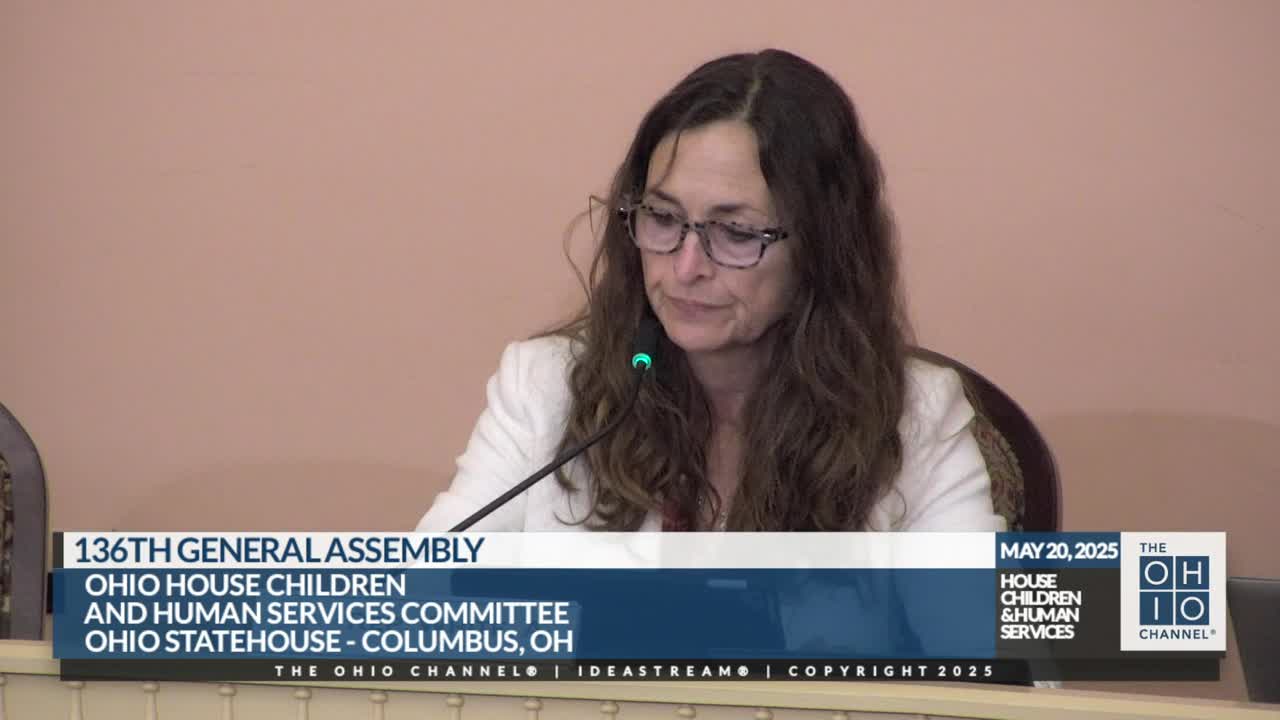
Senator Johnson, sponsor of Senate Bill 138, told the House Children and Human Services Committee at a first hearing that the bill would shorten contract-notice timelines for local ADAMH boards, require a state–local data-sharing and integration plan, and make it a first-degree misdemeanor to operate or advertise uncertified recovery housing.
Senator Johnson, sponsor of Senate Bill 138, told the House Children and Human Services Committee at a first hearing that the bill would shorten contract-notice timelines for local Alcohol, Drug Addiction and Mental Health (ADAMH) boards, require a state–local data-sharing plan, and make it a first-degree misdemeanor to operate or advertise recovery housing without certification.
"First, it reforms the outdated and highly contentious contract requirements pertaining to the ADAMH boards," Senator Johnson said. "The 120 day notice has been slashed in half to only needing at least 60 days notice if either party no longer wishes to enter into another contract. ... Additionally, due to the proposed changes in contracting, the bill implements a 6 month runway following the effective date of its adoption, allowing boards and providers ample time to reassess."
The bill would also require the Ohio Department of Mental Health and Addiction Services (OhioMHAS) to collaborate with ADAMH boards to develop a data-sharing and integration plan, a provision the sponsor described as central to improving recovery planning. "Data is the lifeblood of the ADAMH boards and everyone involved in recovery planning," Johnson said. He added that without data, local boards are "operating blindly."
Senator Johnson said the bill would add "teeth" to earlier recovery-housing reforms by making it a misdemeanor of the first degree for recovery residences that operate or advertise without being certified or accredited. He cited Scioto County as an example of an area with exploitative, unregulated recovery housing.
Committee members pressed the sponsor on implementation details and the capacity of providers and agencies to meet the bill's requirements. Representative Brownlee, who identified herself as a behavioral health provider, said investment will be needed for providers to collect and share standardized data. "I do believe there is a general willingness to share data," Brownlee said, "but there will need to be some investment for providers to be able to build up... start using the new methods of data capture."
Representative Odioso asked whether the bill requires individual providers to produce audited financial statements or whether the state would audit providers. Senator Johnson deferred detailed questions about audit mechanics to subject-matter witnesses, saying the provision had been a point of negotiation among ADAMH boards, providers and OhioMHAS.
During questions, Johnson and multiple members repeatedly cited federal privacy and Medicaid rules — including HIPAA constraints — as barriers that will shape how any statewide data system can be designed and used. The sponsor said stakeholders should develop an Ohio-specific system drawing on models from other states, and that the bill includes a six-month transition period to give local boards and providers time to adjust to contractual changes.
No vote was taken. Committee members said they will follow up with stakeholders and subject-matter witnesses in future meetings. Chairwoman White closed the hearing and the committee approved the minutes for the day's session.
Why it matters: The bill addresses oversight and coordination between local ADAMH boards, treatment providers and the state agency that oversees mental health and addiction services. Its provisions on contracting, data sharing and recovery‑housing certification could affect how local boards negotiate contracts and monitor recovery residences; the bill does not yet resolve detailed audit mechanics or the technical and privacy hurdles for statewide data integration.