Get Full Government Meeting Transcripts, Videos, & Alerts Forever!
Get email alerts on the Behavioral Health topic
No spam. Unsubscribe anytime.
Ohio mental health director outlines statewide expansion of crisis response, recovery supports
Summary
Leanne Corning, director of the Ohio Department of Mental Health and Addiction Services, told the House Community Revitalization Committee the agency will scale youth mobile response statewide, expand adult crisis services, bolster recovery housing and workforce programs, and layer supports for jails and prisons amid high hospital occupancy.
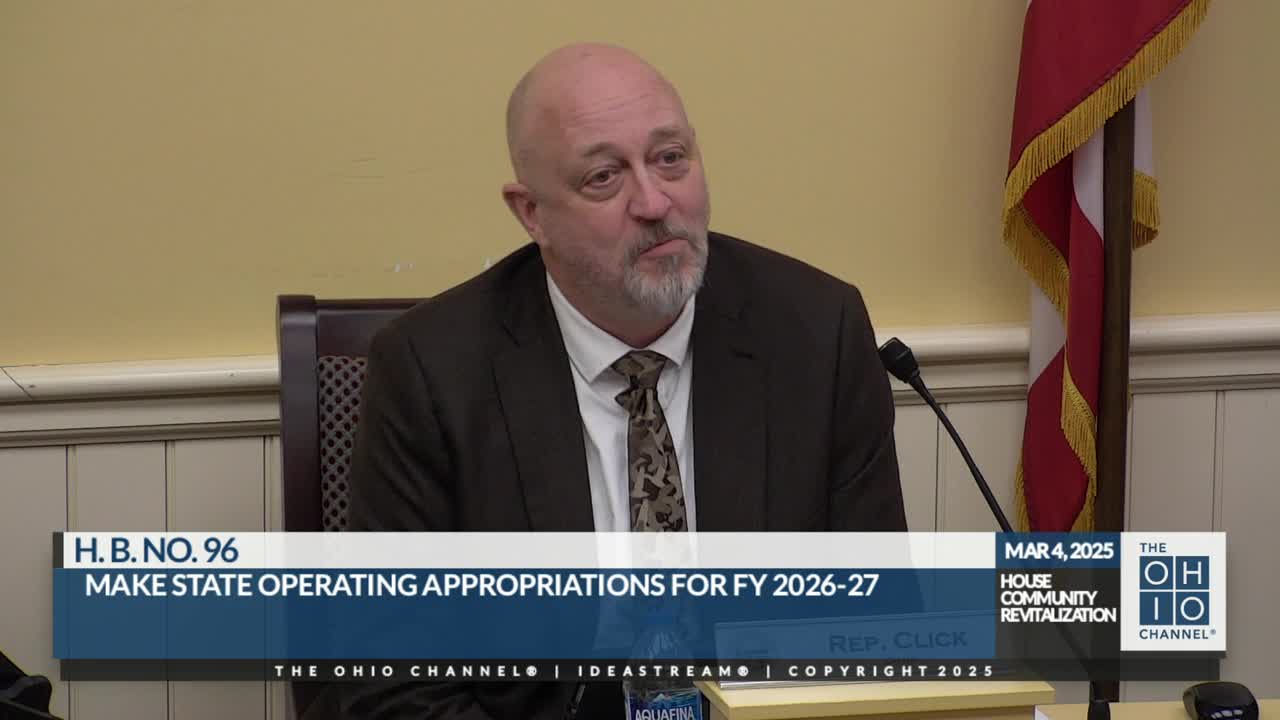
Leanne Corning, director of the Ohio Department of Mental Health and Addiction Services, told the House Community Revitalization Committee on Monday that the department will scale a range of crisis-response, treatment and recovery supports statewide and layer new services for jails and prisons.
Corning said the department is expanding mobile response and stabilization services (MRSS) — a mobile crisis program for youth — from 52 counties to all 88 counties, is proposing investments to build adult mobile response statewide, and is adding forensic navigators, increased medication access in correctional settings, and telepsychiatry pilots to strengthen care in jails and juvenile facilities.
The moves are part of a broader push, Corning said, to build the system promised in the Community Mental Health Act of 1963 and to reduce emergency department visits, hospitalizations and criminal-justice involvement that stem from behavioral health crises. "We can better serve Ohioans in their homes, in their communities," Corning said, adding that a single MRSS encounter with 42 days of follow-up costs about $980 compared with roughly $1,700 for an emergency department visit and about $14,000 for inpatient hospitalization.
Corning summarized the department’s scope and capacity, saying OhioMAS employs 2,853 people, operates six regional psychiatric hospitals with roughly 1,000 inpatient beds and serves about 3,000 Ohioans in those hospitals each year. She said the hospitals are at about 96% occupancy and that more than 90% of state hospital beds are currently occupied by people involved with the criminal justice system.
Why it matters: Committee members pressed Corning on how the department’s proposals would affect people leaving correctional settings, the supply of behavioral health workers, and community-level flexibility in using state funds. Members also raised concerns about dementia care, effects of adult-use cannabis on youth psychosis, and whether federal changes to Medicaid or SAMHSA funding could alter the department’s plans.
Key details and programs
- Mobile response and stabilization services (MRSS): Corning said MRSS began in 2017 with federal grant support and will scale from 52 counties to all 88 counties, with services available regardless of ability to pay. She said MRSS has produced reductions in hospitalizations, criminal-justice involvement and school absences.
- Adult mobile response and 988: The governor’s budget proposal includes resources to expand adult mobile response services in some form across the state; Corning said adult services currently exist in various models in 61 counties. The state also operates 988, the suicide and crisis lifeline, which Corning said the department hopes will become a more widely used front door for crisis help.
- Correctional settings: Corning said OhioMAS deploys more than 200 staff who deliver behavioral health services inside Ohio Department of Rehabilitation and Corrections (ODRC) facilities and that the department is working to provide short-term prescriptions, link people leaving prisons to housing and community care, and expand medications for opioid use disorder and psychotropic medications in jails.
- Forensic navigators and telepsychiatry: The governor’s budget includes funds to hire forensic navigators — licensed social workers who triage people in jails — and to pilot telepsychiatry in partner jails. Corning said the department currently has three navigators and has triaged 30 inmates in Lucas County to date.
- Recovery housing and certification: Following provisions in House Bill 33, Corning said recovery housing operators must now be certified by Ohio Recovery Housing or Oxford House. She reported more than 1,200 recovery homes on the department’s registry and that in January more than 330 providers joined the registry (a 36% increase); Ohio Recovery Housing also saw an 80% increase in new homes seeking certification.
- Opioid treatment providers and peer support: Corning said the number of opioid treatment providers rose from 35 in 2019 to 125 today, serving about 38,000 unique Ohioans. The department has certified roughly 6,000 new peer supporters since 2019, with about 3,300 active peer supporters working in the field.
- Workforce investments: Corning described use of $85 million in one-time Home and Community-Based Services ARPA funding to build workforce pathways and said more than 2,000 behavioral health professionals have been recruited into the field so far. The governor’s introduced budget proposes additional workforce funding, including roughly $18 million targeted to behavioral health workforce efforts.
Questions from lawmakers
Ranking Member Jaime Brewer asked whether an "1115 criminal justice waiver" would help people exiting correctional settings. Corning said the DeWine administration has not pursued an 1115 criminal justice waiver but noted the department’s investments to support medications and community links for people leaving jails and prisons.
Representative Brownlee asked about workforce attraction and retention for MRSS teams. Corning said the department is finalizing agreements with regional contractors, plans to leverage peer specialists and other qualified staff where licensed clinicians are scarce, and will provide more data on pediatric workforce investments tied to children’s hospitals.
Representative Hoops asked whether block grants or waivers could give local ADAMH boards greater flexibility. Corning said the governor’s budget consolidates roughly 20 funding lines into six block grants (prevention, mental health, substance use disorder, criminal justice, crisis, recovery supports) to reduce administrative burden and increase local flexibility while improving outcome-focused reporting.
Other items cited by Corning
- Capital and diversion investments: Corning said the current capital budget included $10 million toward building a new state psychiatric hospital; the recently opened Central Ohio Behavioral Health added 30 beds, and a proposed new hospital would add more than 200 beds. She said the budget includes roughly $23 million to build out a diversion model modeled on a long-standing Florida program.
- Data gaps: Corning and members noted limitations in state data for first-episode psychosis and workforce distribution; Corning said Ohio is likely undercounting psychosis prevalence and is pursuing better, more real-time workforce data.
Ending
Committee members thanked Corning for the overview and asked the department to follow up with additional data and literature reviews on questions such as the link between youth cannabis use and first-episode psychosis and detailed workforce retention metrics. The committee adjourned with no formal votes on the department’s agenda items.