Get Full Government Meeting Transcripts, Videos, & Alerts Forever!
Get email alerts on the Hospital Pricing Reference Based topic
No spam. Unsubscribe anytime.
Committee backs bill to cap state plan hospital facility payments at 200% of Medicare; hospitals oppose
Summary
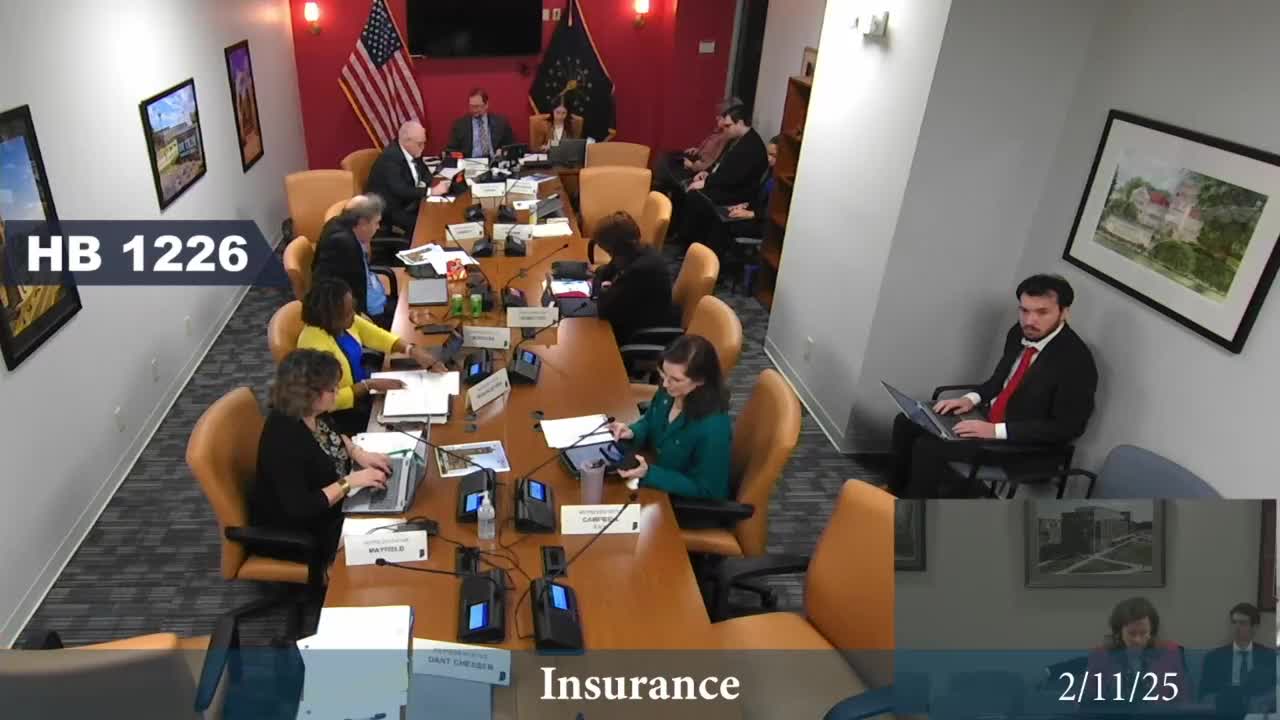
House Bill 15-02 would cap state employee health plan hospital facility reimbursements at 200% of Medicare in-network (185% out-of-network) and passed the Insurance Committee 8-3 after lengthy testimony from state officials and hospital representatives.
House Bill 15-02, sponsored by Representative Maguire, would change reimbursement for hospital facility charges under the state employee health plan to a reference-based model pegged to Medicare rates: 200% of Medicare for in-network facility fees and 185% for out‑of‑network fees. The Insurance Committee voted 8-3 to pass the bill after extensive testimony and debate.
Representative Maguire said hospital price growth is a major driver of rising premiums and described a repricing exercise the state performed on 2023 claims that estimated roughly $88.5 million in annual savings if facility fees were paid at 200% of Medicare. The proposal targets hospital facility fees only and does not change physician professional fees, the sponsor said.
Gloria Sachdev, secretary of the Family and Social Services Administration representing the governor, testified in strong support and cited Oregon’s experience, where a similar cap reportedly led to reductions in outpatient prices and out-of-pocket spending in an independent analysis. Sachdev said Medicare is a national, annually updated benchmark that accounts for hospital acuity and geography and that using Medicare as a reference is a reasonable standard.
Matt Brown, who testified for the state employee health plan, said the plan paid an average of 309% of Medicare for hospital facility services in 2023 and that shifting to 200% would lower spending on those services, which account for roughly two-thirds of the plan’s medical spend.
Hospital representatives strongly opposed the bill. Mike Schroyer, president of Baptist Health Floyd and a representative of the Indiana Hospital Association, said hospitals are already losing money on Medicare and Medicaid reimbursements and warned of added financial pressure that could force program cuts, reduced services or cost shifting. Schroyer said local hospital financials vary and presented system-level cost pressures including rising staffing and contracted services costs.
The bill would also require hospitals to report billing modifiers used for identifying 340B drug purchases so the state can monitor drug-pricing practices. Sponsors said the modifier requirement is a transparency measure to allow the state plan to track how frequently 340B‑priced drugs are billed to the plan.
Committee debate focused on possible access impacts in rural border counties, provider contract behavior, and whether reference-based pricing would lead hospitals to limit care or shift costs to other commercial payers. Supporters referenced independent analyses from Oregon and Montana showing savings and limited negative access effects; opponents said local hospital financial conditions and Medicaid/Medicare underpayment make a statewide cap risky for some facilities.
The committee adopted no further amendments on the floor and passed House Bill 15-02 by roll call 8-3. A summary of roll-call explanations showed several members expressing concern about rural hospitals and cross-border providers; others said the state has an obligation to curb hospital pricing and that the state employee plan should align more closely with Medicare benchmarks.